
The Hot Seat β€” English Brew
English Brew  Β·  Season 1  Β·  Episode 4
Business English Β· Intermediate–Upper Intermediate

The Hot Seat:
Why 1 in 9 CEOs
Lost Their Job Last Year

A record number of top executives are clearing out their corner offices. We use the story to master five business English expressions you'll actually need.

Hosts Luna & Mimyo
Level B2 – C1
Source Morning Brew, Feb 17 2026
Duration ~10 min

A Record Wave of CEO Departures

The corner office has always been a symbol of power and stability. But according to a Wall Street Journal analysis of 1,500 major public companies, that stability is cracking. In 2025, roughly one in nine CEOs was replaced β€” the highest rate of leadership turnover since the aftermath of the 2008 financial crisis.

And 2026 is already picking up where last year left off. Companies with a combined market value of $2.2 trillion have already swapped out their top leaders just weeks into the new year, including household names like Walmart, Disney, Lululemon, and PayPal.

1 in 9 CEOs replaced among top companies in 2025
$2.2T Combined value of companies with new CEOs in early 2026
54 Average age of incoming CEOs β€” younger than before
80% Of new CEOs last year were first-timers

So why now? Companies have cited what Morning Brew called "a potpourri of reasons" β€” artificial intelligence disrupting entire industries, trade tariffs reshuffling global supply chains, and a general climate of economic and geopolitical uncertainty. The solution many boards have landed on: bring in someone younger, fresher, and willing to take risks the old guard wouldn't.

"They're turning to younger and greener execs to fix their problems β€” more than 80% of last year's new CEOs were first-timers."

It's a bold bet. Handing the wheel of a trillion-dollar company to someone who has never run one before is either visionary or reckless, depending on who you ask. Either way, the trend is reshaping what leadership looks like at the top of the business world.


Maya & Alex at the Office Coffee Station

In this episode, we eavesdrop on Maya and Alex β€” two colleagues processing the news over their morning coffee β€” and pull out the vocabulary that makes the conversation sound natural and real.

β˜• Scene β€” Tuesday morning Β· Office kitchen
Maya Alex, did you see the news? Apparently one in nine CEOs got replaced last year. The turnover at the top is absolutely insane right now.
Alex I heard. The whole c-suite feels like a revolving door these days β€” here today, gone tomorrow.
Maya And apparently they're replacing them with younger, greener executives. Like, people with way less experience running a massive company.
Alex I mean, companies want fresh blood. The old guard tried a potpourri of strategies and nothing stuck, so why not take a chance?
Maya I guess. But our CEO has been here fifteen years. You don't think he's about to put in his two weeks, do you?
Alex After that last earnings call? I wouldn't be shocked. The board looked like they'd rather be anywhere else.
Maya Great. So I should probably update my resume... just in case the turnover reaches our floor.
Alex Always a good idea. In this climate, no corner office is safe.

5 Expressions Worth Owning

These five expressions appear naturally in business news, office conversations, and job interviews. Learn them here β€” use them everywhere.

01 Β· Turnover

The rate at which people leave a group or organization and are replaced by others. High turnover = many people leaving. Low turnover = people staying long-term. Used in business, HR, and even casual conversation.

Business "The hospitality sector has historically struggled with high employee turnover."

Casual "Our friend group has crazy turnover β€” someone new shows up every month."

02 Β· C-Suite

The collective term for a company's most senior executives β€” those whose titles begin with "Chief": CEO (Executive), CFO (Financial), COO (Operating), CMO (Marketing), and so on. The "suite" suggests they occupy the same executive floor.

Business "The company announced a major c-suite restructuring ahead of its IPO."

Casual "She went from intern to c-suite in ten years β€” total boss move."

03 Β· Greener

Less experienced. When someone is described as "green," it means they are new to something and still learning β€” like a young plant that hasn't fully grown yet. "Greener" is the comparative form: even less experienced than someone else.

Business "We cannot afford greener hires at this stage β€” the role requires at least eight years of experience."

Casual "He was so green on his first day, he accidentally emailed the entire company."

04 Β· Potpourri

A random, varied mixture of things. Originally a French word referring to a decorative bowl of dried flowers and herbs used to scent a room. In English, it evolved into an idiom for any eclectic mix. Morning Brew even named it their Word of the Day the same edition we featured it!

Business "The board cited a potpourri of concerns, from regulatory pressure to falling consumer confidence."

Casual "Dinner tonight was a potpourri of whatever was left in the fridge."

05 Β· Put in your two weeks

To formally resign from a job by giving two weeks' notice before your final day. In the US, it is standard practice to give an employer this advance warning so they can begin finding a replacement. "Putting in your two weeks" is the polite, professional way to quit.

Business "After twelve years at the firm, she put in her two weeks and accepted a senior role abroad."

Casual "I heard Jake finally put in his two weeks. Said his manager was impossible."


Test Your Business Knowledge

We know CEO stands for Chief Executive Officer.
What does CFO stand for?

  • A Chief Financial Officer βœ“
  • B Chief Federal Officer
  • C Chief Facilities Organizer

The CFO oversees all financial operations β€” budgeting, reporting, forecasting. If the company is bleeding money, the CFO is the one sweating the hardest.


English in the Real World

The reason we chose this story isn't just because it's current β€” it's because the language around it is everywhere. Whether you're reading a business article, sitting in a team meeting, listening to a podcast, or interviewing for a job, you will encounter these words. Turnover appears in almost every HR discussion. C-suite shows up in financial news daily. Putting in your two weeks is something any English speaker working in an international environment needs to understand.

The goal of English Brew is never to teach you textbook English. It's to close the gap between the English you studied and the English people actually use β€” in offices, in coffee shops, in headlines, and in conversations that matter.

"No corner office is safe." β€” Alex, in this episode. And maybe a useful reminder for all of us to keep learning.

Ready to hear it all come together? Listen to the full episode.

Listen Now β†’

βš–οΈ The Weight Loss Drug Wars | Knock-off, Legal gray area, Thumb on the scale, Red line & Get in on the action πŸ’Š

The Weight Loss Drug Wars

Have you ever seen a product that was too good to be true? That is exactly what happened this week in the pharmaceutical world.

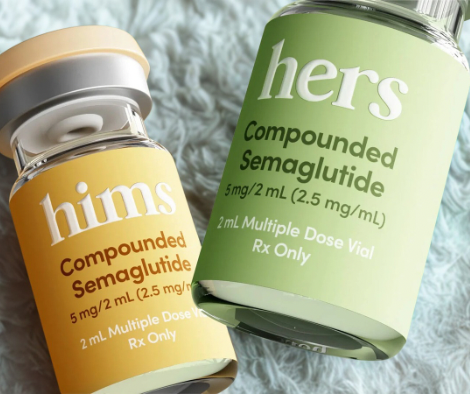
In today’s episode of English Brew, we are diving into the high-stakes drama between the telehealth company Hims & Hers and the US government.

The story is simple but dramatic: Hims & Hers launched a $49 version of the popular weight loss drug Wegovy. But there was a catchβ€”it wasn’t the official brand. The FDA (Food and Drug Administration) stepped in immediately, warning of “legal action,” and the company had to pull the product off the market.

This short-lived business battle is the perfect opportunity to learn 5 essential English idioms about rules, competition, and unfair advantages.

Let’s brew some English! β˜•οΈ


πŸ—£ Dialogue Transcript

Read along as Maya and Alex discuss the latest news in the pharmaceutical industry.

Maya: Did you hear about Hims & Hers pulling that cheap weight loss pill already? That was fast.

Alex: I know. They tried to sell a knock-off version of Wegovy, but the FDA clearly wasn’t having it.

Maya: It seems like they were operating in a real legal gray area with those custom compound mixes.

Alex: Definitely. But once the big pharma companies complained, the FDA put their thumb on the scale.

Maya: I guess Hims & Hers finally crossed a red line with the patent holders.

Alex: It’s a shame for customers, though. Everyone wants to get in on the action, but nobody can afford the name brand.

Maya: Exactly. It’s a battle between affordable access and protecting a patent.

Alex: Well, for now, it looks like the cheap option is officially off the menu.


πŸ“ Expression Spotlight

Here are the five key expressions from today’s lesson, with the examples used by Luna and Mimyo in the episode.

1. Knock-off

  • Definition: A cheap copy or imitation of a famous brand or product. It is often used negatively, but sometimes people use it with pride if they saved money!
  • “I love these sunglasses. They’re knock-offs of Ray-Bans, but they only cost ten bucks.”

2. Legal Gray Area

  • Definition: A situation where the rules are not clear. It applies to laws, but also to morality or social rules.
  • “Using my roommate’s shampoo without asking is a bit of a legal gray area.”

3. Thumb on the Scale

  • Definition: To unfairly influence a result. It basically means an authority figure is cheating to help one side win.
  • “The referee is putting his thumb on the scale for the home team.”

4. Red Line

  • Definition: A strict boundary or limit. It comes from diplomacy (like a country warning another country), but we use it in relationships too.
  • “I don’t mind if my boyfriend plays video games, but lying to me is a red line.”

5. Get in on the Action

  • Definition: To join something that is already successful because you don’t want to miss out (FOMO).
  • “Think about Bitcoin a few years ago. Everyone saw the price going up and said: I need to get in on the action before it’s too late.”

🧠 Pop Quiz: What does “Compound” mean?

In the podcast intro, Luna asked Mimyo a tricky question about the word “Compound.”

  • A) To make a problem worse.
  • B) To calculate interest at a bank.
  • C) To mix ingredients together.

The Answer: In the context of a pharmacy, the answer is C! A “compounding pharmacy” mixes specific ingredients (like semaglutide and Vitamin B12) to create a custom drug for a patient.


Related Posts