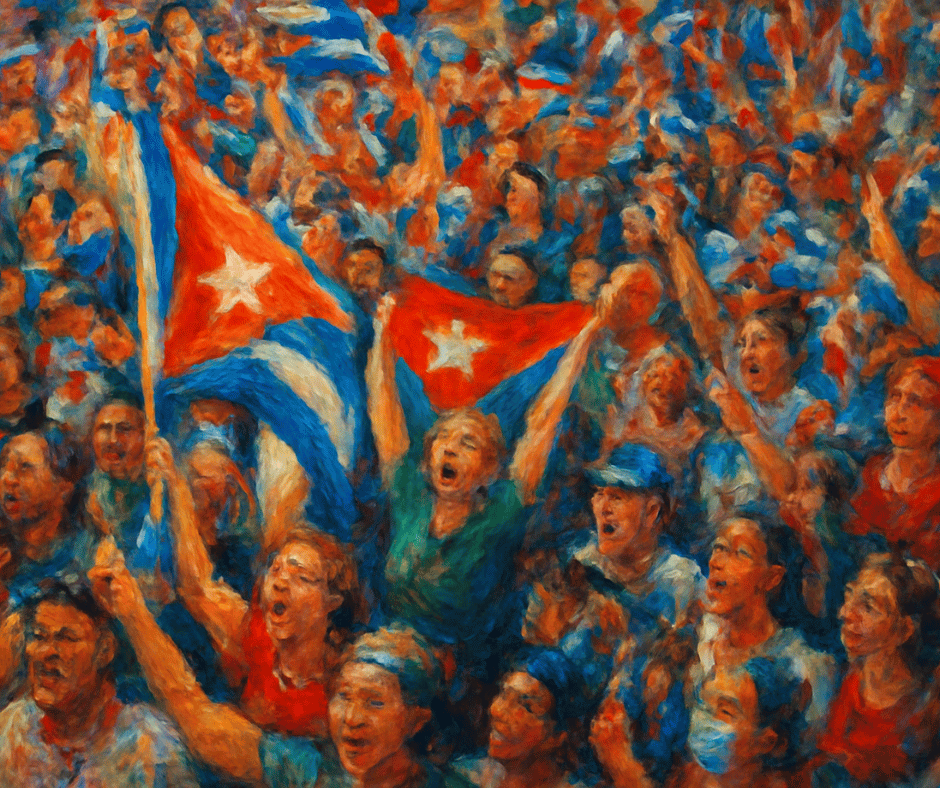
As widespread blackouts plunge Cuba into darkness for up to 15 hours a day, public frustration has boiled over into nationwide protests. Let's examine the intense language journalists are using to cover this crisis and boost your English vocabulary along the way.
In today's vocabulary lesson, we are looking at three essential English expressions taken directly from news headlines covering the recent events in Cuba. Amidst a US blockade on oil, Cuba has been facing severe electricity blackouts lasting up to 15 hours a day, leading to nationwide protests and a deepening economic crisis.
By understanding the vocabulary used by major news outlets to describe these intense situations, you can greatly improve your English comprehension. Let’s explore three key expressions, complete with in-depth explanations and everyday examples.
1. Ransack
"Cuban protesters ransack Communist office as energy crisis deepens"
– BBC News
Definition: To search a place in a violent or careless way, often causing damage.
Behind the Headline: In the context of the Cuban protests, citizens driven by frustration over the blackouts broke into government offices. The word paints a picture of protesters forcefully searching the premises and leaving destruction in their wake.
Beyond the Dictionary: While the news uses this word to describe property damage and break-ins, native speakers frequently use "ransack" in a less serious, everyday way. If you are frantically looking for something, you might "ransack" a room. This means you overturned everything in a panic, even if you didn't actually break anything or commit a crime.
"I was so late for work this morning that I completely ransacked my bedroom looking for my car keys."
"The excited children ransacked the living room searching for where their parents hid the holiday presents."
2. Grapple With
"Trump threatens to ‘take’ Cuba as island grapples with nationwide blackout"
– Al Jazeera
Definition: To try hard to understand or solve a very difficult problem.
Behind the Headline: The article uses this to describe Cuba's immense, ongoing struggle to restore electricity and manage the fallout of the power grid collapse. It highlights a heavy, complex burden that has no immediate or easy fix.
Beyond the Dictionary: Literally, the verb "to grapple" means to physically wrestle an opponent in a fight. However, today it is almost entirely used metaphorically as the phrasal verb "grapple with." It implies a long, exhausting mental or emotional struggle. We use it for everything from large societal issues to personal, everyday dilemmas.
"Many schools are currently grappling with how to handle artificial intelligence in the classroom."
"I've been grappling with the decision of whether to accept the new job offer or stay at my current company."
3. Exile
"Cuba invites exiles to invest in businesses on the island"
– Reuters
Definition: Someone who has been forced to leave their own country (usually for political reasons), or the state of being sent away.
Behind the Headline: The Reuters headline refers to Cubans who previously left the country and now live abroad. The government is asking these former residents to return as investors to help save the struggling economy.
Beyond the Dictionary: "Exile" is highly versatile. It can be a noun (the person, or the state of being away) or a verb (to send someone away). Beyond global politics, it is frequently used metaphorically in social situations or the workplace to describe being shut out or ignored by a group.
"After the embarrassing public scandal, the CEO was essentially exiled from the tech industry."
"When my roommates argue, I usually retreat to self-imposed exile in my bedroom until things cool down."