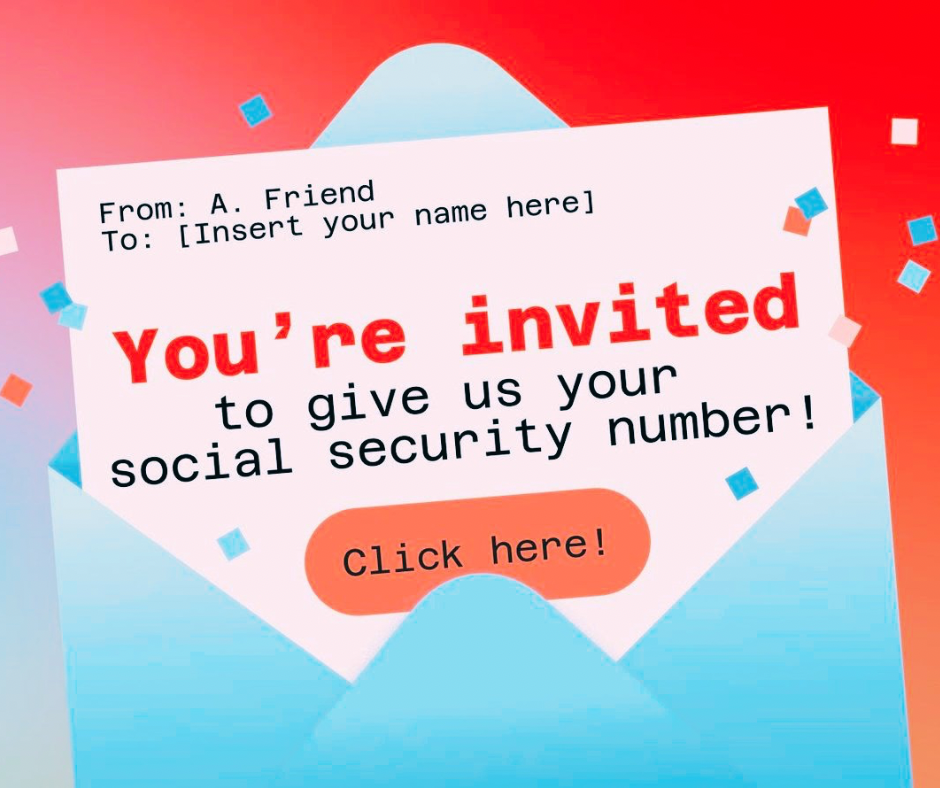
Sometimes phishing attempts use fear to get you to click a bad link, like pretending the "IRS" demands back taxes[cite: 54]. But lately, scammers have started preying on a much more primal emotion: our longing to feel included[cite: 55]. Fake party invitations spoofed to look like they are from platforms like Paperless Post and Evite are circulating online, tricking targets into clicking malicious links[cite: 56]. In today's episode, we break down this tricky cybersecurity news and extract five excellent B2+ expressions perfect for discussing human psychology, warnings, and modern trends.
⚡ 5 Key Expressions
Expression 01
Think twice
To stop and carefully reconsider an action before doing it. You use this when you want to warn someone that their first instinct or immediate impulse might be dangerous, risky, or foolish[cite: 54]. It acts as a polite but firm warning to pause.
- "I'd think twice about taking on that massive car payment if I were you."
- "We need to think twice before changing the entire software system right before a deadline."
Expression 02
Spoof
To forge or maliciously alter something so it looks like it came from a trusted source. Hackers often spoof email addresses, websites, or caller IDs[cite: 56]. In an entertainment context, "spoof" can mean a funny parody, but in technology, it acts as digital camouflage used for deception.
- "Don't answer that number; scammers are spoofing the bank's customer service line."
- "They spoofed the CEO's email address and tried to get accounting to wire funds."
Expression 03
Make the rounds
To circulate widely from person to person or place to place. The phrase paints a visual picture of movement[cite: 56]. It is incredibly versatile and works perfectly for describing the spread of information, physical illnesses, rumors, or online trends.
- "There's a rumor making the rounds that we might get a holiday bonus."
- "Be careful, there is a really bad flu making the rounds at the office."
Expression 04
Lizard brain
A casual, humorous term for the most primitive part of the human brain that controls basic survival instincts, immediate impulses, and automatic reactions[cite: 54]. You use it to admit that you acted on pure emotion or instinct rather than logic.
- "I know I shouldn't eat the whole pizza, but my lizard brain took over."
- "When the fire alarm went off, my lizard brain kicked in and I just ran for the door."
Expression 05
Prey on
To intentionally target or exploit someone's vulnerability, weakness, or emotion for your own advantage. It carries a strong, dark tone of unfair exploitation[cite: 55]. As a phrasal verb, it frames the victim as "prey" and the exploiter as the predator.
- "Those late-night commercials prey on elderly people who live alone."
- "The new algorithm seems to prey on users' insecurities to keep them scrolling endlessly."
🎭 The Dialogue: The Fake RSVP
Maya and Alex are sitting at their desks checking their personal emails when something catches Maya's eye.
📍 An office space, midday. Maya is looking at an email on her monitor.
Maya: Alex, did you get an Evite from Sarah for a weekend barbecue? It just popped into my inbox.
Alex: Yeah, I did. But I'd think twice before clicking that link if I were you. It looks incredibly sketchy.
Maya: Really? But it's from Sarah! Why on earth would she spoof a party invite?
Alex: She didn't. Hackers did. It's a massive phishing scam making the rounds right now.
Maya: Whoa. That's terrifying. Normally my lizard brain just hits "RSVP Yes" the second I see the word "barbecue."
Alex: Exactly the point. They intentionally prey on our desire to be included so we drop our guard.
Maya: That is so messed up. I thought it was just a wholesome neighborhood get-together!
Alex: Yep. But click that link, and instead of free hotdogs, you're getting malware installed on your hard drive.
🧠 Episode Quiz
Can you answer this?
Cybersecurity experts study human psychology very closely to understand why we fall for scams. What is the number one emotion that hackers try to trigger in a phishing email to guarantee that you'll click their malicious link?
- A — Greed (like a cash prize)
- B — Urgency (like a 24-hour deadline)
- C — Curiosity (like a mysterious photo attachment)
✅ Answer: B — Urgency. While greed and curiosity are effective, triggering panic and a sense of urgency (like threatening that an account will be deleted in 10 minutes) ensures that your "lizard brain" reacts before you have time to "think twice."
📚 Bonus Vocabulary
Phishing (noun) — A cyber attack that uses disguised, deceptive emails as a weapon to steal sensitive information. "The IT department just sent out a warning about a new phishing campaign targeting our passwords."
Malware (noun) — A blended word (malicious + software). It refers to programs designed to disrupt, damage, or gain unauthorized access to a computer system[cite: 58]. "Clicking on that unknown attachment downloaded malware that locked up my entire hard drive."
Sketchy (adjective) — Slang for something that seems dishonest, unsafe, or suspicious. "I wouldn't buy tickets from that website; it looks really sketchy."