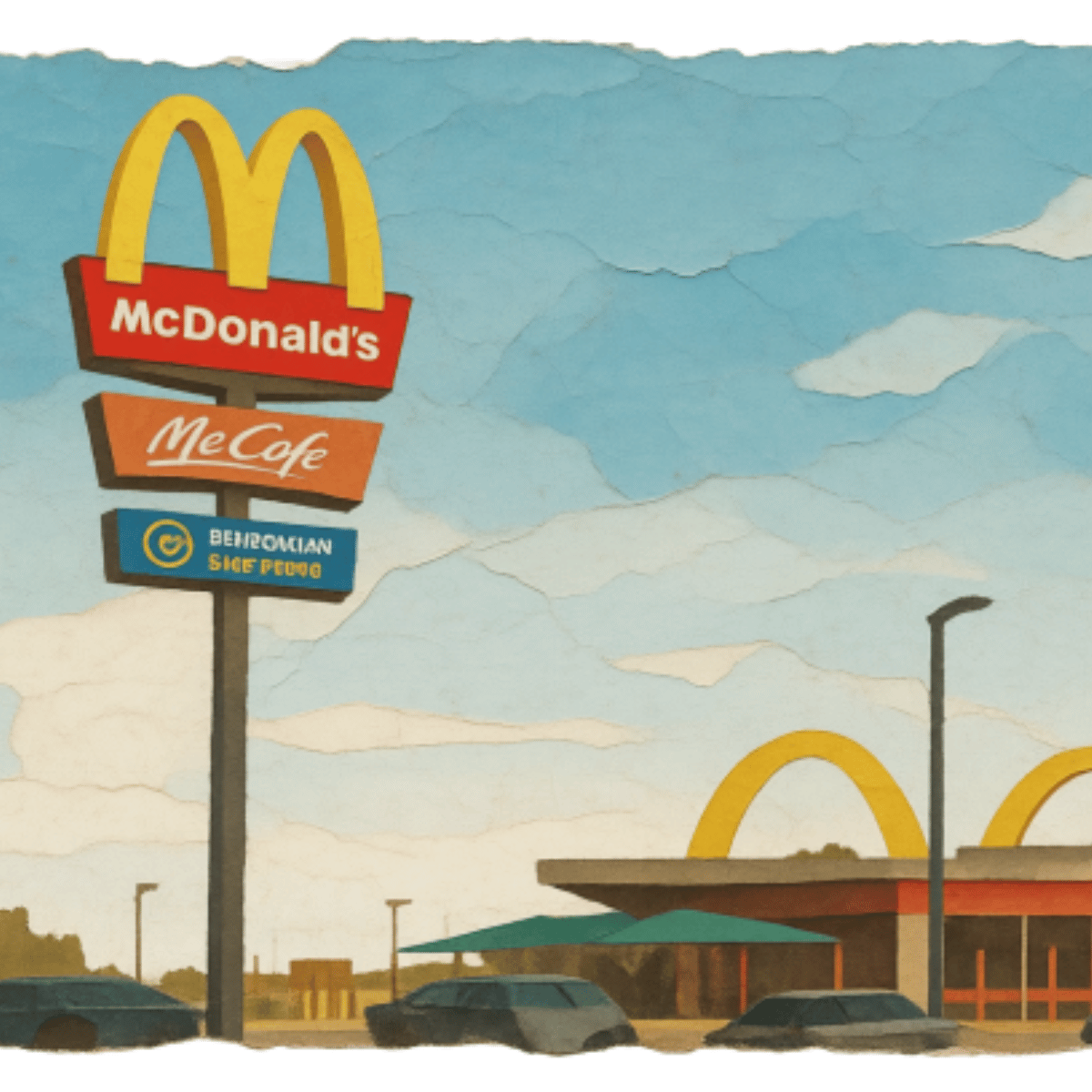
McDonald's just reported quarterly earnings — and somehow, a burger chain's numbers became a window into the entire US economy. When even fast food feels the pressure, you know something bigger is going on. In this episode, we break down what's really happening to American consumers right now, and pick up five essential B2 expressions that work equally well in business meetings, job interviews, and everyday conversation.
⚡ 5 Key Expressions
Expression 01
Catch heat
To receive strong criticism, backlash, or negative attention — usually because something went wrong and people are blaming you for it. The "heat" here is the pressure and discomfort of public or professional disapproval. You don't catch heat for doing something great; it's always tied to a mistake, a misstep, or a bad outcome. McDonald's CEO caught heat before the earnings report even dropped — a viral video showed him taking what reporters described as a reluctant, unconvincing bite of the company's new burger. The internet did not let it go.
- "The marketing director caught heat after the campaign flopped in three major markets."
- "My roommate caught heat from everyone after he forgot to pay the electricity bill. Again."
Expression 02
Come in above expectations
To perform better than what was predicted or anticipated. In business and finance, analysts publish estimates before a company reports earnings — and then the actual results either beat, meet, or miss those estimates. "Coming in above expectations" means the real numbers were higher than the forecast. It's a phrase built on the idea that there's always a benchmark, a prediction, a bar — and this time, you cleared it. Despite a difficult economic backdrop, McDonald's earnings came in above expectations, which surprised many on Wall Street.
- "Her performance review came in above expectations — she's already being considered for a promotion."
- "The party came in way above expectations. I thought it would be awkward, but it was actually great."
Expression 03
Squeeze
To put financial pressure on someone or something, leaving less room to spend, breathe, or maneuver. When something squeezes your budget, it doesn't take money directly — it forces money toward one thing, which means less is left for everything else. High gas prices squeeze households because that spending has to come from somewhere. It's a powerful verb because it captures both the pressure and the shrinking space it creates. Think of squeezing a tube of toothpaste — you're forcing the contents out in one direction, and eventually there's nothing left.
- "Rent increases are squeezing young professionals out of the city entirely."
- "Wedding costs are really squeezing us right now. We might have to cut the guest list."
Expression 04
Consumer sentiment
The general mood, confidence level, and financial outlook of everyday buyers. When people feel optimistic about the economy and their own finances, consumer sentiment is high — and they spend freely. When people feel anxious, uncertain, or stretched, sentiment drops — and spending follows. It's measured by regular surveys, and economists track it closely because how people feel tends to predict what they do with their money. Since late February, consumer sentiment in the US had been falling, rattled by geopolitical tensions and rising prices. McDonald's CEO cited it directly on the earnings call.
- "Consumer sentiment dropped sharply after the announcement, and retail sales followed within the month."
- "Have you noticed how stressed everyone seems about money lately? That's low consumer sentiment playing out in real life."
Expression 05
Take a hit
To suffer a loss, setback, or negative impact — financially, reputationally, or otherwise. The phrase is borrowed from the physical world: something gets hit, and it absorbs the damage. In business English, almost anything can take a hit: sales, revenue, share price, reputation, morale, relationships. What makes it useful is its flexibility and emotional directness — it's less clinical than "decline" and more vivid than "fall." McDonald's warned investors that next quarter's sales would likely take a hit, even after beating this quarter's estimates.
- "Our Q3 revenue took a hit when the product launch got delayed by six weeks."
- "My savings really took a hit this month — new tires, a dentist bill, and a broken phone. All at once."
🎭 The Dialogue: Brace for Tomorrow
Maya and Alex both work in finance. It's Friday morning, the McDonald's earnings report just landed, and they're doing what their whole office does — reading the news over coffee and trying to figure out how worried to be.
📍 Office break room, Friday morning. Maya has her phone out. Alex walks in and pours two cups.
Maya: Did you see McDonald's earnings this morning? I was honestly expecting a disaster.
Alex: Same. But they actually came in above expectations, which surprised pretty much everyone on the Street.
Maya: Right — though the CEO was catching heat before the report even dropped. That video of him barely touching the new burger did not help.
Alex: Classic PR nightmare. But the real issue he flagged wasn't the burger — it was gas prices squeezing lower-income households.
Maya: That makes sense. When people are spending more at the pump, they have less left over for everything else — even a five-dollar meal.
Alex: Exactly. And consumer sentiment has been rough since February. The geopolitical situation rattled people.
Maya: So even though they beat estimates this quarter, they're warning that sales are going to take a hit in the next one?
Alex: That's the message. Beat today, brace for tomorrow.
🧠 Episode Quiz
Can you answer this?
McDonald's is famous for the Big Mac. But in what year did the Big Mac first go on sale to the general public?
- A — 1955
- B — 1968
- C — 1974
✅ Answer: B — 1968. The Big Mac was invented not by McDonald's corporate, but by a franchise owner named Jim Delligatti in Pennsylvania. He wanted something bigger on the menu, pitched the idea to headquarters, received reluctant approval to test it — and the rest is history. The most iconic item on the menu wasn't even a corporate idea.
📚 Bonus Vocabulary
At the pump (phrase) — at the gas station, specifically when paying for gasoline. A very common shorthand in American English. "Prices at the pump are expected to stay above four dollars through the summer."
Rattle (verb) — to unsettle or unnerve someone; to shake their confidence. When something rattles people, it doesn't just inform them — it disturbs them emotionally. "The surprise announcement rattled investors, and the stock dropped immediately."
Brace (verb) — to prepare yourself physically or mentally for something difficult or unpleasant that is coming. Alex's closing line — "Beat today, brace for tomorrow" — uses this perfectly. "The team braced for the worst after the first-quarter numbers came in."