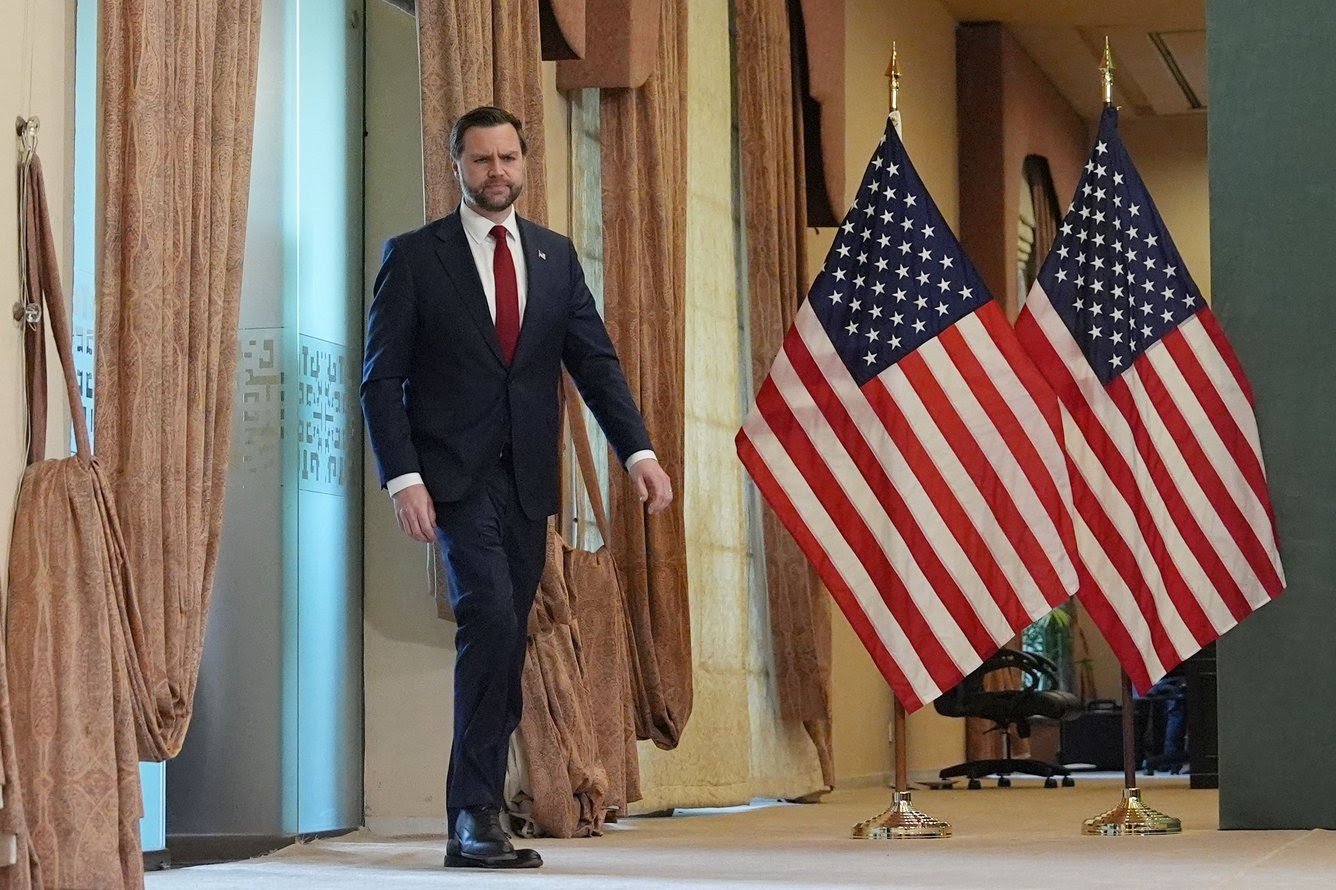
Peace talks collapse. A naval blockade begins. Oil prices surge. When the US and Iran failed to reach a deal this weekend, President Trump made one of the most dramatic geopolitical moves in recent memory — shutting down the Strait of Hormuz, the narrow waterway through which roughly one-fifth of the world's seaborne oil passes every single day. In this episode, we break down the crisis and pick up five B2 expressions that will serve you in negotiations, news conversations, and professional life.
⚡ 5 Key Expressions
Expression 01
Flip the leverage
To reverse who holds the power in a negotiation — to take away the other side's advantage and turn the situation in your favor. Leverage, in any negotiation, is the thing that gives you the upper hand. Iran had leverage by controlling a critical waterway and charging ships to pass. When Trump announced the blockade, he flipped that leverage: rather than let Iran profit from access, the US removed the access entirely. The expression works anywhere there's a power dynamic — business deals, salary talks, even everyday disputes. The flip is the key word: not just gaining power, but inverting it.
- "She walked into the salary negotiation with a competing offer — that completely flipped the leverage."
- "My brother kept borrowing my car, so I started borrowing his charger. Flipped the leverage immediately."
Expression 02
Yield to
To give in to pressure, demands, or authority — to let the other side have what they want after resistance. The word shares its roots with the idea of giving way, which is why you still see it on traffic signs. But in everyday English, yield to almost always carries emotional or social weight. There's always a force pushing on you, and a moment of decision: do you hold your ground, or do you yield? Iran refused to yield to US demands — meaning they didn't back down, didn't comply, didn't give an inch. Crucially, yielding isn't always a defeat. You can yield to temptation, to good advice, or to your own better judgment.
- "After months of pressure from investors, the board finally yielded to demands for a leadership change."
- "I told myself I wouldn't check my phone at dinner, but I yielded to the temptation about ten minutes in."
Expression 03
Shell out
To pay a significant amount of money, usually reluctantly or unwillingly. It's always informal, always tinged with a sense of complaint or resignation. Some shipping companies were shelling out two million dollars just to cross the Strait of Hormuz — paying a toll under an illegal system Iran had set up. The expression works at any price point, as long as the payment feels excessive or unwanted. You'd shell out for an expensive car repair, an overpriced concert ticket, or a medical bill you didn't see coming. Note the register: shell out belongs in conversation, not in formal reports where you'd say "incurred costs" instead.
- "The company had to shell out over a million dollars in legal fees before the case was even settled."
- "I can't believe I shelled out forty dollars for airport coffee. Never again."
Expression 04
Protracted
Lasting far longer than expected or wanted — dragged out over time in a way that wears people down. The word comes from Latin: pro (forward) and trahere (to drag or pull). Something protracted is literally being pulled forward in time against everyone's preference. A protracted conflict. A protracted negotiation. A protracted silence. The word always implies that the length itself is the problem — that things should have resolved sooner but didn't. It sits at an elevated register, more formal than "long" or "drawn-out," which makes it especially useful in professional or analytical contexts. When analysts warned of a "protracted shipping cataclysm," they weren't just saying it would last a while — they were signaling that the duration itself would cause damage.
- "The merger talks turned into a protracted negotiation that delayed the deal by nearly two years."
- "What was supposed to be a quick coffee catch-up became a protracted three-hour conversation."
Expression 05
Exacerbate
To make a bad situation worse — not to create the problem, but to intensify it, to add fuel to a fire that was already burning. This is the key distinction: you can only exacerbate something that already exists. The blockade didn't create the oil shortage; it exacerbated it. The word leans formal — you'll hear it in news coverage, medical reporting, academic writing, and business analysis — but educated speakers use it in conversation without sounding stiff. Mastering exacerbate is a reliable signal of upper-intermediate fluency, because it forces you to think clearly about cause and effect: the problem came first, and this action made it worse.
- "The new regulations were meant to help small businesses, but many economists argued they would only exacerbate the problem."
- "Skipping sleep doesn't just make you tired — it exacerbates every other issue you're already dealing with."
🎭 The Dialogue: Scrambling
Maya works in finance and Alex is in supply chain. It's Monday morning and the news has just hit. They're grabbing a moment in the break room before the day takes over.
📍 Office break room, Monday morning. Maya is reading the news on her phone. Alex walks in.
Maya: Did you see what happened this weekend? The peace talks fell apart and now we're looking at a full naval blockade of Hormuz.
Alex: I saw. Trump basically decided to flip the leverage — Iran was charging ships to pass through, so now the US is shutting the whole thing down.
Maya: Iran refused to yield to any of the demands. No nuclear deal, no free passage. And now everyone pays the price.
Alex: Some shipping companies were already shelling out two million dollars just to get through the strait. Now there's no getting through at all.
Maya: This is going to be protracted. I don't see either side backing down quickly.
Alex: Agreed. And a longer blockade is only going to exacerbate the oil shortage. Prices were already climbing before this.
Maya: Our logistics costs are going to take a serious hit. I need to get ahead of this before the quarterly report.
Alex: You and everyone else. The whole supply chain world is scrambling right now.
🧠 Episode Quiz
Can you answer this?
The Strait of Hormuz is one of the most strategically important waterways on the planet. Approximately what percentage of the world's seaborne oil passes through it every single day?
- A — About ten percent.
- B — About twenty percent.
- C — About forty percent.
✅ Answer: B — Roughly twenty percent of the world's seaborne oil passes through the Strait of Hormuz daily. The strait is only about 33 kilometers wide at its narrowest point — one geographic bottleneck carrying one-fifth of the global oil supply. That's why a blockade there doesn't just affect Iran. It affects energy prices, manufacturing costs, and supply chains across the entire world.
📚 Bonus Vocabulary
Blockade (noun/verb) — the act of sealing off a place to prevent goods or people from entering or leaving. A military blockade is one of the oldest tools of economic pressure in history. "The naval blockade cut off the country's access to imported fuel within days."
Brittle (adjective) — fragile, easily broken, holding together only under limited stress. The ceasefire was described as "brittle" — meaning it was technically in place but could shatter at the slightest pressure. "The brittle truce between the two departments collapsed the moment budgets were discussed."
Scrambling (verb, present participle) — moving or reacting urgently and chaotically in response to an unexpected situation. Alex closes the dialogue with it: the whole supply chain world is scrambling. No plan, no preparation — just urgent, disorganized reaction. "When the product launched early by accident, the marketing team was scrambling to put together a campaign overnight."