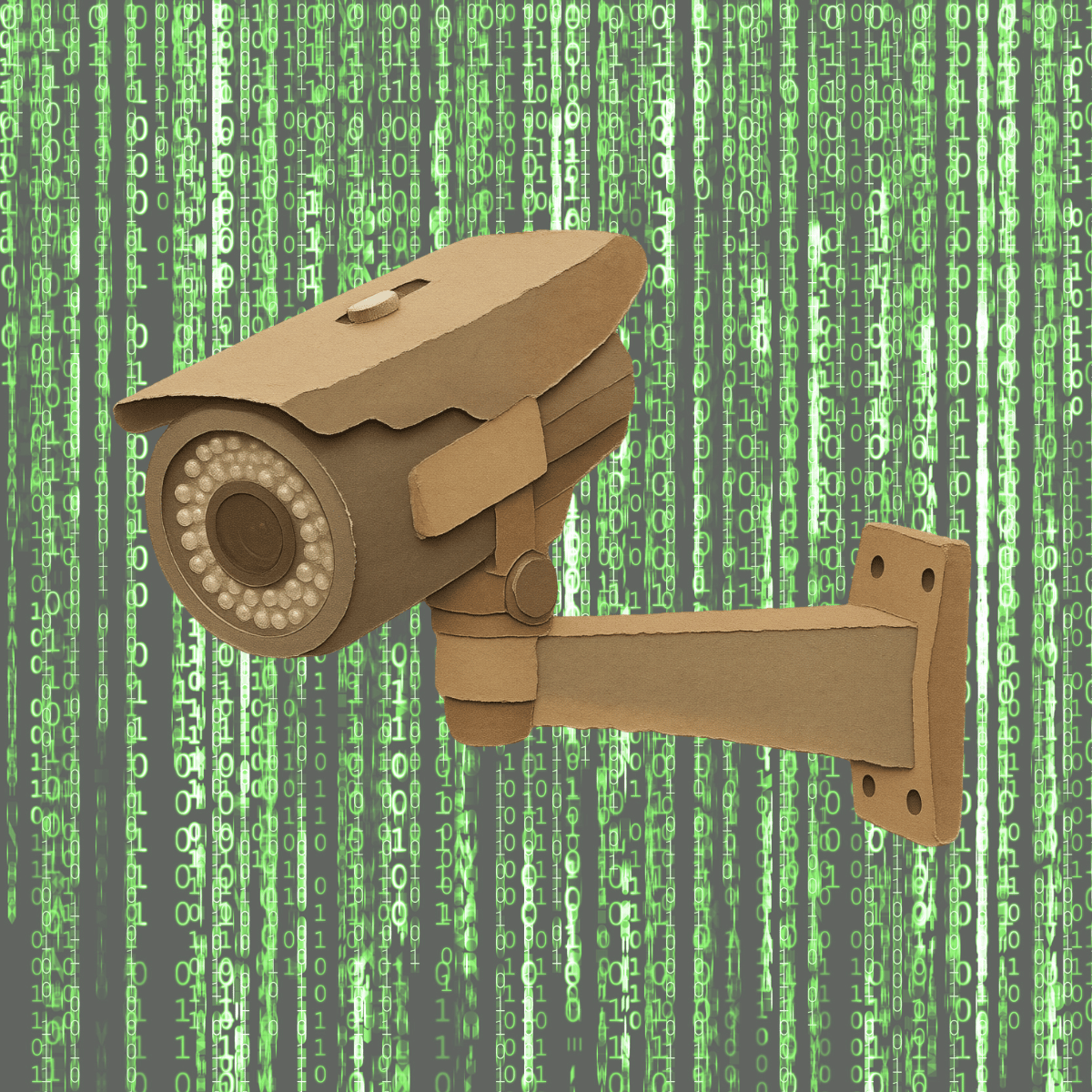
Is your boss secretly using AI to judge your "concentrating-too-hard" face? [cite: 13] According to a new report from the Atlantic, tools known as "emotion AI" are slowly creeping into workplaces[cite: 12]. These apps claim they can read your feelings by measuring your tone and facial expressions—sometimes directly through Zoom extensions[cite: 12, 14]. While the EU has largely banned workplace emotion AI , many employees worldwide might soon have to convince a bot they are always cheerful[cite: 30]. In this episode, we break down a workplace conversation about this controversial tech and teach you 5 native-level expressions that you can use in the office, on Slack, and in daily life.
⚡ 5 Key Expressions
Expression 01
Creep into
To move slowly, quietly, and gradually into a space or situation—often without being noticed until it is already there. The Morning Brew article notes that Emotion AI is "creeping into workplaces"[cite: 12]. It isn't arriving with a big, loud announcement; rather, it is quietly being integrated into the software we already use. This phrasal verb is incredibly useful for describing slow changes, bad habits, or subtle feelings.
- "Doubt started to creep into his mind right before the big presentation."
- "I need to proofread better; a few spelling errors have been creeping into my emails lately."
Expression 02
Perk up
To suddenly become more energetic, cheerful, or alert. Imagine a thirsty plant that is drooping—when you water it, it stands tall, or "perks up." In the workplace, AI headsets are now allegedly reminding tired employees to "perk up"[cite: 21]. You will hear this phrasal verb constantly when talking about coffee, energy levels, or business activity.
- "I was falling asleep at my desk, but that double espresso really perked me up."
- "Sales were terribly slow in the morning, but business perked up after lunch."
Expression 03
Out of thin air
To create or invent something from absolutely nowhere, with no solid foundation or evidence. If someone claims AI tools "invent details out of thin air"[cite: 65], it means the data isn't based on reality. It feels like a magic trick. We use this idiom when someone makes unrealistic demands, invents crazy excuses, or produces numbers with no proof.
- "You can't just expect a million-dollar budget to appear out of thin air!"
- "He was late again and pulled a completely ridiculous excuse out of thin air."
Expression 04
Paper trail
A series of documents, records, or digital footprints that provide evidence of what you did or said. When CEOs or executives handle sensitive matters, it is wise not to leave a "paper trail" of internal freakouts[cite: 76]. Even though we primarily use email and Slack today, we still call it a paper trail. It's a crucial term in business, law, and corporate IT policies.
- "The auditors couldn't find a paper trail to explain where the missing company funds went."
- "Always communicate important decisions via email so you have a solid paper trail if things go wrong."
Expression 05
Make or break
An adjective phrase used to describe a critical factor, moment, or decision that will lead to either absolute success or total failure[cite: 81]. There is no middle ground. When hyphenated before a noun, it adds instant, high-stakes drama to a sentence. It’s perfect for describing final exams, critical negotiations, or major life choices.
- "The final quarter of the year is a make-or-break period for retail stores."
- "She prepared all week because she knew this interview was the make-or-break moment for her career."
🎭 The Dialogue: Fake Smiles & Smart Cameras
Maya and Alex are coworkers having a quick video chat. They just received an email from their IT department regarding a new "productivity" update for their meeting software.
📍 A video call between colleagues, Tuesday morning.
Maya: Have you seen the new meeting software IT is installing? They say it's just to transcribe our calls.
Alex: I read the fine print. Emotion AI is slowly creeping into our systems, and this one tracks our facial expressions.
Maya: You're kidding. So if I don't smile enough on camera, my manager is going to get an alert telling me to perk up?
Alex: Basically. And it assigns you a "positivity score." It feels like they're just pulling these metrics out of thin air.
Maya: That's honestly terrifying. I'm definitely not going to leave a paper trail complaining about it on Slack, though.
Alex: Smart move. Honestly, this kind of surveillance could be a make-or-break issue for a lot of employees here.
Maya: Agreed. Well, I guess I need to start practicing my fake customer service smile.
Alex: Good luck. I’m just going to put a sticky note over my webcam.
🧠 Episode Quiz
Can you answer this?
Workplace emotional surveillance is a highly controversial topic globally. In fact, one major government body recently took action and entirely banned workplace emotion AI, except for strict medical or safety reasons. Which one was it?
- A — The United States
- B — The European Union
- C — The United Nations
✅ Answer: B — The European Union. Last year, the EU officially banned workplace emotion AI. The US, on the other hand, currently has no federal equivalent protecting workers from this kind of surveillance[cite: 27].
📚 Bonus Vocabulary
The fine print (noun phrase) — The small text in a contract or agreement that contains important (and often restrictive) rules people usually skip reading. "The service looks free, but if you read the fine print, they charge you after 30 days."
Surveillance (noun) — The careful, continuous watching of a person or group, often to monitor behavior[cite: 22]. "Privacy advocates are concerned about the growing level of digital surveillance in modern offices."
Metrics (noun) — A set of numbers or data used to measure performance or results. "The marketing team's metrics showed a huge increase in website traffic this month."