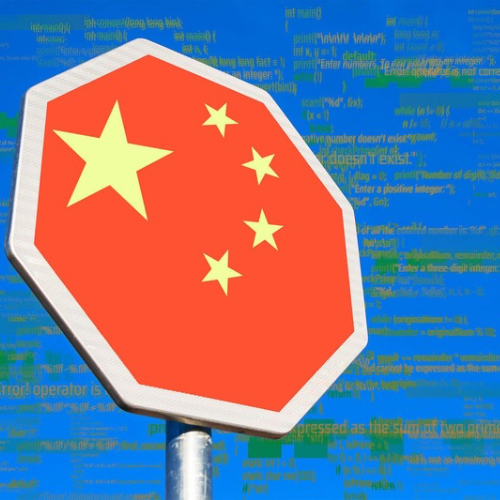
Meta just hit a $2 billion roadblock. Beijing recently ordered the tech giant to back out of its massive acquisition of an AI startup called Manus[cite: 25]. The unexpected move comes as tech tensions between the US and China continue to escalate—and it's sending a massive warning to companies trying to strike cross-border deals[cite: 27]. In this episode, we break down the corporate drama and pick up five essential B2+ expressions that are perfect for business negotiations, news analysis, and everyday conversations.
⚡ 5 Key Expressions
Expression 01
Unwind (a deal)
To officially undo or reverse a complex business transaction. Because corporate acquisitions involve lawyers, shared assets, and millions of dollars, you can't simply "cancel" them—you have to carefully untangle or "unwind" the connections[cite: 25, 28]. Outside of finance, to unwind means to relax and release tension after a stressful period.
- "The regulators forced the two telecom giants to unwind their merger due to monopoly concerns."
- "After a twelve-hour shift at the hospital, I just need a hot shower and a good book to unwind."
Expression 02
Ramp up
To deliberately increase the speed, intensity, or level of something[cite: 27]. Think of a physical on-ramp to a highway where cars accelerate to join the traffic. In business, you ramp up production, marketing efforts, or hiring. In politics, tensions and rivalries often ramp up before a conflict.
- "The factory is ramping up production to meet the sudden surge in holiday demand."
- "As the election approaches, both candidates are ramping up their advertising campaigns."
Expression 03
Tit for tat
Calculated retaliation where one party inflicts the exact same level of harm that was done to them[cite: 35]. It is a phrase deeply rooted in trade wars, politics, and corporate rivalries. It is not blind revenge; it is equivalent payback. It often functions as an adjective phrase describing a dispute or a war.
- "The two airlines engaged in a tit for tat price war, constantly undercutting each other's ticket prices."
- "The neighbors have been locked in a petty tit for tat dispute over their property line for years."
Expression 04
Let (something) slide
To intentionally ignore a rule violation, mistake, or bad behavior instead of punishing the person responsible[cite: 40]. It is the act of choosing grace or convenience over strict enforcement. It is an incredibly common conversational phrase used by teachers, managers, and parents.
- "You were fifteen minutes late this morning, but since it's your first time, I'll let it slide."
- "I noticed a small typo in your presentation, but it wasn't a big deal so I just let it slide."
Expression 05
Toothless
Lacking the actual power or authority to enforce a rule or threat[cite: 41]. The metaphor is of an animal that barks aggressively but literally has no teeth to bite you. We use this to describe laws, committees, or warnings that look intimidating on paper but have no real-world consequences.
- "The new environmental regulations are completely toothless because there are no fines for breaking them."
- "The ethics committee issued a toothless warning that the executives basically ignored."
🎭 The Dialogue: Drawing a Hard Line
Maya and Alex are taking a coffee break at their tech firm, discussing the morning news cycle.
📍 The office breakroom, Tuesday morning. Maya is scrolling her phone while Alex waits for the espresso machine.
Maya: Alex, did you catch the Morning Brew today? Beijing is ordering Meta to unwind its two-billion-dollar deal to buy the AI startup Manus.
Alex: Yeah, it’s wild. As the global AI race ramps up, China is clearly drawing a hard line in the sand.
Maya: It feels like a classic tit for tat situation, especially after the US advanced new bills to tighten chip export controls.
Alex: Exactly. Startups used to just move overseas to bypass these issues, but Beijing isn't letting that slide anymore.
Maya: But Manus is headquartered in Singapore now. Isn't Beijing's order kind of toothless?
Alex: You'd think so! But their CEO got summoned to Beijing and was literally barred from leaving the country.
Maya: Wow. That sends a massive warning to any US tech firm hoping to scoop up a Chinese AI startup.
Alex: Totally. The era of easy cross-border tech acquisitions is officially over.
🧠 Episode Quiz
Can you answer this?
To insulate themselves from geopolitical tensions, many startups undergo a process called "China-shedding," which involves relocating their headquarters. Before Meta attempted to acquire them, Manus moved its headquarters to which destination known for low taxes and friendly diplomacy? [cite: 32, 33]
- A — Tokyo
- B — London
- C — Singapore
✅ Answer: C — Singapore. The country has become an attractive destination for tech firms because of its corporate tax environment and its ability to maintain friendly diplomatic postures with both Washington and Beijing[cite: 33]. However, as the Manus case shows, simply moving an office might not completely shield a company from international regulatory reach[cite: 28, 41].
📚 Bonus Vocabulary
Scoop up (phrasal verb) — to buy or gather something quickly or eagerly, often before someone else can get it[cite: 41]. "Investors rushed to scoop up the company's shares after the positive earnings report."
Barred (adjective/verb) — prevented or officially prohibited from doing something or entering a place[cite: 31]. "The executives were barred from leaving the country pending the regulatory investigation."
Headquartered (adjective/verb) — having the main office or center of operations in a specific location[cite: 25, 28]. "Though originally founded in Europe, the startup is now headquartered in Silicon Valley."