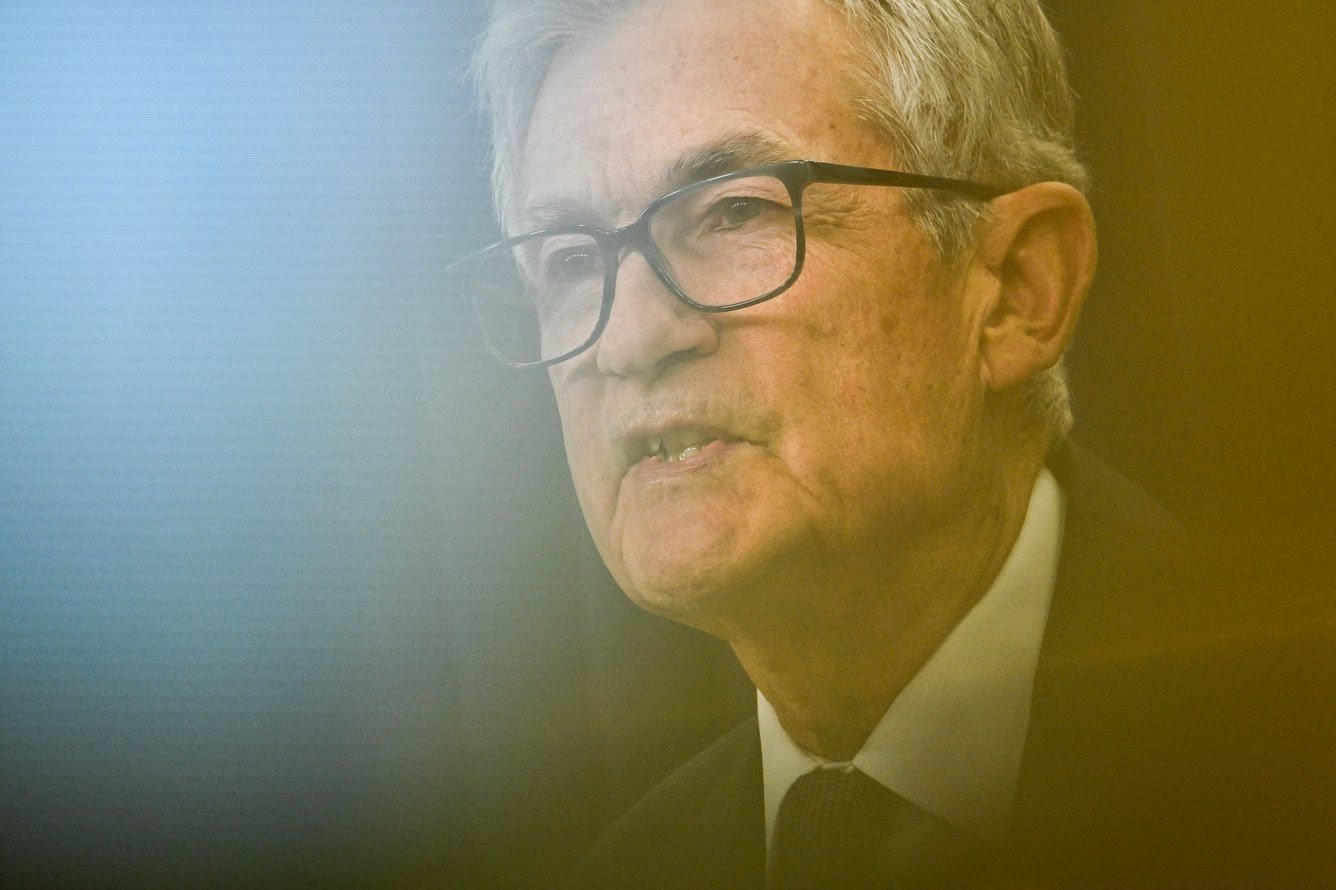
Jerome Powell just held his final press conference as chair of the Federal Reserve — but don't expect him to clean out his desk. He's giving up the title while keeping his seat on the board, making him the first Fed chair since 1948 to do so. Meanwhile, the Fed held interest rates steady despite growing internal disagreement, and a new chair is preparing to take over. In this episode, we unpack the story and pick up five powerful B2 expressions — including vacate the throne, hold steady, and a long time coming — that work just as well in the boardroom as in everyday conversation.
⚡ 5 Key Expressions
Expression 01
Not going anywhere
To be so established, stubborn, or powerful that you cannot — or will not — be removed. On the surface it means someone is physically staying put, but idiomatically it signals that a person, thing, or situation is here to stay regardless of pressure or expectation. The same phrase can also flip into something warm and reassuring: telling a nervous friend "I'm not going anywhere" means you're staying by their side. Context and tone carry all the weight here.
- "This technology has been disrupting the industry for five years. It's not going anywhere."
- "Hey, I'm right here. I'm not going anywhere — take all the time you need."
Expression 02
Vacate the throne
To formally leave a position of great power or authority. The verb vacate comes from Latin vacuus, meaning empty — when you vacate something, you make it empty by leaving. On its own, vacate is formal and appears in contexts like hotel checkouts, parking spaces, or office handovers. Pairing it with throne — a royal metaphor — signals that the position being left is no ordinary job. It's a seat of real power. The combination makes a departure sound historic, which in Powell's case it genuinely is.
- "The outgoing CEO agreed to vacate the office by the end of the month to ease the transition."
- "Can you vacate the couch? I need the whole thing to myself for this film."
Expression 03
Hold steady
To remain stable and unchanged, especially when under pressure to move or react. The critical word is hold — this is active, deliberate resistance, not passive inertia. When the Fed holds rates steady, it is making a conscious decision to resist the forces pushing for change. The phrase travels well beyond finance: you can hold steady in an argument, a difficult conversation, a sports match, or a personal crisis. It implies discipline and resolve rather than mere stillness.
- "Despite market volatility throughout the quarter, the company's share price held steady."
- "The ladder's a bit wobbly — can you hold it steady while I climb up?"
Expression 04
Have the helm
To be in control of an organization, project, or situation — to be the one steering. The helm is the wheel or tiller that directs a ship, and English inherited a rich vocabulary of leadership metaphors from the sea. Take the helm emphasizes the moment of transition — the act of assuming control. Have the helm describes the ongoing state of being in charge. So Kevin Warsh will take the helm in June, and once he's running things, he has it. The distinction is subtle but useful.
- "After the merger, the new CEO took the helm and immediately restructured three departments."
- "My sister always has the helm when we plan family trips — she just takes over and everyone's fine with it."
Expression 05
A long time coming
Something that was delayed but felt inevitable — something that should have happened earlier, and finally did. The phrase captures delayed inevitability: not just that something took a long time, but that it was building and building until it finally arrived. It often carries quiet relief, as if a collective breath is being exhaled. Importantly, the tone doesn't have to be positive — a long-overdue collapse or reckoning is also "a long time coming." The phrase acknowledges history. It says: this didn't just happen today.
- "The regulatory reform was a long time coming, but the industry is finally starting to adjust."
- "You two finally talked things out? That was a long time coming."
🎭 The Dialogue: Steady as She Goes
Maya and Alex both work in finance. It's Thursday morning and they've barely put their bags down before the conversation turns to Jerome Powell's farewell press conference — and everything that comes after it.
📍 Office, Thursday morning. Alex is already at his desk with coffee. Maya drops her bag and pulls up the news on her phone.
Maya: Did you catch Powell's press conference yesterday? That man is not going anywhere.
Alex: I know. He's vacating the throne but staying on as a governor. First time that's happened since 1948.
Maya: And rates are holding steady again. Four dissenters on the vote this time — that's the most since 1992.
Alex: Warsh will have the helm by June. And he actually wants to cut rates, so things could shift fast.
Maya: Honestly, a Powell-to-Warsh handover has been a long time coming. The pressure on JPow has been building for months.
Alex: True. Though Powell basically said he's not leaving until the investigation into him is closed.
Maya: Which is very on-brand for him. Hold your ground, hold your rates, hold everything.
Alex: At this point I think JPow is the one thing in this economy that isn't going anywhere.
🧠 Episode Quiz
Can you answer this?
The Federal Reserve was created in 1913. But why was it created in the first place?
- A — To fund America's military during World War One.
- B — To stop the kind of bank panics that had been crashing the economy.
- C — To manage the value of gold in the US treasury.
✅ Answer: B — The Fed was established largely in response to the Panic of 1907, a severe financial crisis where banks across the country failed and the economy nearly collapsed. It took a private bailout from J.P. Morgan — the actual man, not the bank — to stop the bleeding. Congress decided that one wealthy individual holding the economy together was unacceptable, and created a central bank to manage financial stability instead.
📚 Bonus Vocabulary
Dissenter (noun) — someone who formally disagrees with a majority decision. Four of the twelve Fed committee members voted against holding rates steady — the most dissenters since 1992. In broader use, a dissenter is anyone who publicly breaks with the consensus view. "There were a few dissenters in the meeting, but the proposal passed with a strong majority."
On-brand (adjective) — completely consistent with how someone or something is known to behave. Originally a marketing term, it's now used casually to describe anything that fits perfectly with a person's or organization's established identity. Its opposite, off-brand, describes something surprisingly out of character. "Showing up two hours early is very on-brand for her — she's never late to anything."
Hold your ground (phrase) — to maintain your position under pressure, refusing to retreat or give in. Military in origin — literally standing your ground on a battlefield — it now applies to arguments, negotiations, and any situation that demands resolve. "The team held its ground during the negotiation and walked away with a better deal than expected."