
What Happened
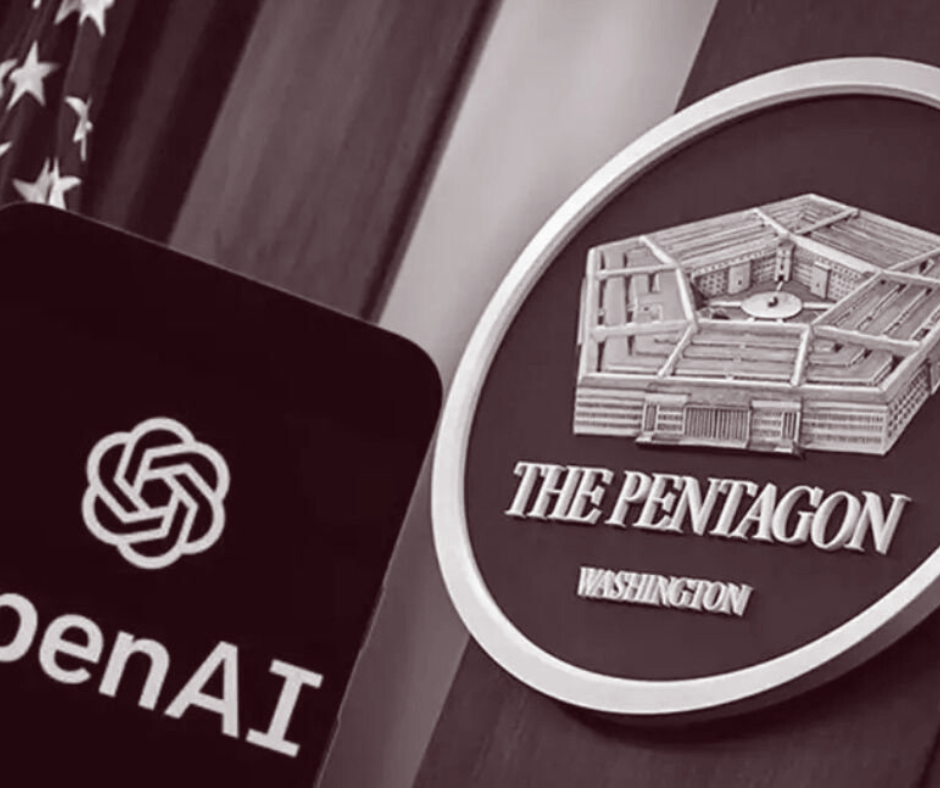
On February 28, 2026, the US Department of Defense ended a high-stakes standoff with a surprising twist. Anthropic, the AI company behind Claude, had a 200 million dollar defense contract on the line. The Pentagon gave them a deadline: drop the requirement that their AI could not be used for mass domestic surveillance or fully autonomous weapons, or lose the deal. Anthropic refused. The contract was cancelled.
Then, around 10pm that same night, OpenAI CEO Sam Altman posted on X that his company had reached an agreement with the Department of Defense to deploy their models on a classified network — with the same ethical restrictions Anthropic had fought for. One company lost the deal for drawing a line. Another company won it by drawing the same line.
The story was dramatic, fast-moving, and full of the kind of language that shows up constantly in business news. Today we are breaking down five expressions from this story that every upper-intermediate English learner needs to know.
Listen to the Dialogue
Before we break down the expressions, read through this conversation between Maya and Alex. They are colleagues at a tech startup who just saw the news over their morning coffee. All five expressions appear naturally in the dialogue. See how many you can spot before reading the explanations below.
Maya: Alex, did you see what happened with the Pentagon and Anthropic last night? I cannot believe they just lost that contract.
Alex: I saw it. Anthropic drew their red lines, the government said no, and then OpenAI walked in and took the whole deal.
Maya: But here’s the thing — OpenAI said it kept the same guardrails in its agreement. No mass surveillance, no fully autonomous weapons.
Alex: Then why couldn’t Anthropic just do the same thing? Their bedrock principles were identical!
Maya: Politics, I think. The government wanted to be the one setting the rules, not the company. It’s a power struggle.
Alex: Either way, the ripple effects are going to be huge. Every AI company is going to be watching how this plays out.
Maya: And that OpenAI funding round — a hundred and ten billion dollars! But apparently it’s contingent on them going public or achieving AGI.
Alex: AGI? Well, if that’s the condition, I hope they figure out AGI before the money runs out.
Did you spot all five? Let’s break them down one by one.
Expression 1: Red Lines
In the dialogue, Alex says: Anthropic drew their red lines, the government said no, and then OpenAI walked in and took the whole deal.
To draw a red line means to establish a non-negotiable limit. Cross that limit, and the deal — or the relationship, or the agreement — is finished. In the real story, Anthropic’s red line was a clause preventing their AI from being used for mass domestic surveillance or fully autonomous weapons. The Pentagon refused to accept that condition. Anthropic walked away.
The origin of this expression is military. A red line was literally drawn on a map to mark a boundary that an enemy force could not cross without triggering a response. Over time, the phrase moved from the battlefield into diplomacy, business, and everyday conversation.
Business example: The CEO made it clear that cutting the research budget was a red line — any board member who proposed it would face her resignation.
Casual example: Look, I can handle a messy roommate, but leaving dirty dishes in the sink for a week — that is my red line.
Expression 2: Guardrails
In the dialogue, Maya says: OpenAI said it kept the same guardrails in its agreement. No mass surveillance, no fully autonomous weapons.
Guardrails are the built-in rules or limits designed to prevent dangerous or unethical outcomes. Think about the metal barriers on a mountain road that stop your car from going over the edge. The road is still open. You can still drive. But there are structures in place to prevent disaster. That is exactly how the word works in business and policy.
The important nuance is that guardrails are proactive — you put them in place before something goes wrong, not after. This is what makes them different from a consequence or a punishment. They are preventive by design.
This word has exploded in usage since AI became a mainstream conversation. You will encounter it constantly in tech, finance, government, and education reporting.
Business example: The company introduced strict financial guardrails to prevent another accounting scandal.
Casual example: I had to put some guardrails on my online shopping. I actually deleted all the apps from my phone.
Expression 3: Bedrock Principles
In the dialogue, Alex says: Then why couldn’t Anthropic just do the same thing? Their bedrock principles were identical!
Bedrock is the layer of solid rock deep underground that everything above it rests on. When we talk about bedrock principles, we mean the values so fundamental to a person or organization that removing them would change what that entity essentially is. They cannot be negotiated away without collapsing the foundation.
Notice how bedrock principles and red lines work together in this context. The red lines are the specific things a company refuses to do. The bedrock principles are the deeper values that explain why. One describes the action, the other describes the reason behind it.
This expression tends to appear in mission statements, leadership writing, and editorial commentary. Bedrock alone also works as a standalone noun or modifier in slightly less formal contexts.
Business example: The organization refused to compromise on its bedrock principles, even when investors pushed back.
Casual example: Good coffee in the morning is honestly a bedrock principle of my entire personality.
Expression 4: Ripple Effects
In the dialogue, Alex says: Either way, the ripple effects are going to be huge. Every AI company is going to be watching how this plays out.
Imagine dropping a stone into a perfectly still pond. The stone hits the water and creates one circle, then another, then another, spreading outward in every direction. That is a ripple effect. One central event causes a chain of consequences that keep spreading, often further and in more unexpected directions than anyone anticipated.
In this story, the original event was Anthropic losing the contract. The ripple effects included other AI companies reviewing their own government agreements, investors reconsidering their risk assessments, and governments around the world beginning to ask harder questions about AI regulation.
What makes ripple effects different from simply saying consequences is the implication that the spread is ongoing, wide-reaching, and often unpredictable. It carries a sense of scale and momentum that the word consequences alone does not.
Business example: The factory closure had ripple effects across the entire region, affecting everything from local restaurants to property values.
Casual example: When my older sister quit social media, it had ripple effects on our whole friend group. Slowly, one by one, everyone started posting less.
Expression 5: Contingent On
In the dialogue, Maya says: That OpenAI funding round — a hundred and ten billion dollars! But apparently it’s contingent on them going public or achieving AGI.
Contingent on means dependent on a specific condition being met first. If the condition does not happen, the result does not happen either. It carries the same meaning as depends on, but it is more formal and appears frequently in contracts, legal documents, financial agreements, and business reporting.
The grammar pattern is always the same: contingent on plus a noun, or contingent on plus a gerund — the ing form of a verb.
With a noun: The job offer is contingent on a background check.
With a gerund: The funding is contingent on meeting the sales targets.
Casual example: My going to the gym today is entirely contingent on finding my other sneaker.
Quiz Answer
In this episode, we asked: the US Department of Defense is also known by another name — one that Sam Altman deliberately used in his announcement post. What is it?
The answer is the Department of War.
The Department of Defense was officially called the Department of War until 1947, when it was renamed. It is a piece of history that most people have forgotten. But Altman chose to use the old name in his post, and many commentators noted it was a pointed and deliberate choice — a way of acknowledging the weight and sensitivity of the agreement OpenAI had just signed.
Keep Your Vocabulary Growing
The five expressions in today’s episode — red lines, guardrails, ripple effects, bedrock principles, and contingent on — are not just useful for talking about AI news. They appear across business negotiations, political reporting, financial documents, and professional conversations of every kind. Learn them well and you will start seeing them everywhere.
That is the English Brew approach. Real news, real language, real progress.
See you in the next episode.