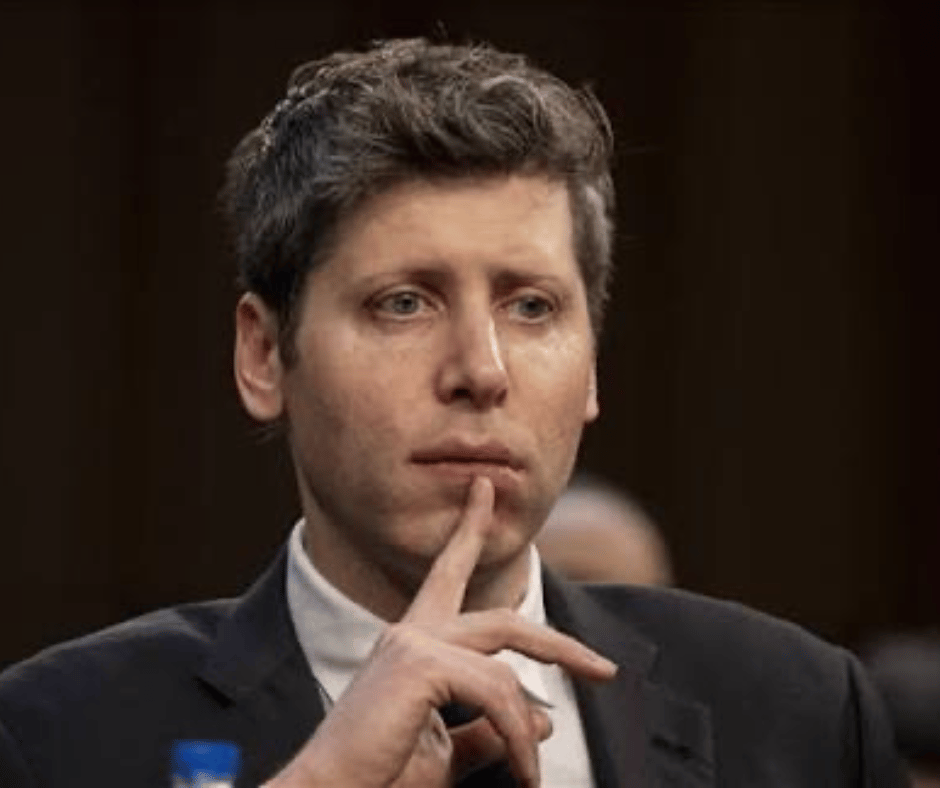
OpenAI — the company behind ChatGPT — just had one of its worst ten-day stretches ever. They killed their e-commerce plans, signed a Pentagon contract that sent users deleting the app by the hundreds of thousands, lost a senior executive to resignation, and watched their own CEO publicly admit the timing was "opportunistic and sloppy." And yet — $730 billion valuation, 900 million weekly users. In this episode, Luna and Mimyo use the whole messy story to teach five expressions that show up constantly in business English and everyday life.
To experience intense pressure or criticism from multiple directions at once. The image is physical — you feel the warmth before you get burned. What makes this phrase so useful is that the source of pressure can be anyone: a boss, the public, investors, competitors, or even your own team. The Morning Brew headline used it brilliantly: "OpenAI is feeling the heat, but it's not cooked" — a full cooking metaphor in nine words.
"The sales team is really feeling the heat after missing targets for the third quarter in a row."
"My roommate is feeling the heat — landlord wants rent and she's completely broke."
Expression 02
Not cooked
"Cooked" in modern informal English — especially in business commentary and sports journalism — means completely finished, done for, beyond saving. "Not cooked" is its defiant opposite: still alive, still competitive, still in the game. The word skews younger and casual, but it's appearing more and more in serious business writing. It's the kind of word that travels from group chats into boardroom analysis without anyone noticing the transition.
"Despite the data breach, analysts say the company isn't cooked — their fundamentals are still strong."
"Don't write him off yet. He missed one game. He's not cooked."
Expression 03
Reversal
A complete, public change of direction — from a position that was previously firm and announced. What separates a "reversal" from simply "changing your mind" is the public commitment that came before. When OpenAI declared it would build checkout technology into ChatGPT and then quietly dropped the entire plan, analysts called the reversal "stunning." The word carries embarrassment built into its structure. A reversal has an audience.
"The board's sudden reversal on the merger shocked investors who had already started planning."
"After years of saying she'd never move abroad, her reversal surprised her entire family."
Expression 04
Open a can of worms
Picture a sealed tin can used for fishing bait. The moment you open it, worms go everywhere — impossible to recapture, impossible to pretend didn't happen. "Opening a can of worms" means taking one action that immediately releases a tangled mess of new, hard-to-resolve problems. Morning Brew even used the company name as a verb in their headline: "OpenAI-ing a can of worms." That level of wordplay is only possible when the idiom is truly embedded in the language.
"Restructuring the team without a clear communication plan opened a real can of worms with HR."
"I asked my parents who their favourite child was. Huge can of worms."
Expression 05
Backlash
The word itself sounds like what it means — sharp, reactive, and forceful. A "lash" is a whip strike; "back" signals it comes in return. Backlash is not quiet disapproval. It is collective, public, and fast — the kind of pushback that arrives as a wave, not a trickle. What distinguishes it from plain "criticism" is scale and speed. When 295% more people uninstall an app in a single day, that is backlash. When one colleague says you were unclear in a meeting, that is just feedback.
"The price increase triggered immediate backlash, and the company reversed its decision within 48 hours."
"His comment about the film got serious backlash in the group chat. He had to apologise."
🎭 The Dialogue: Office Coffee Corner
Maya and Alex are grabbing coffee in their office kitchen when Alex starts scrolling through the news. Can you catch all five expressions as they come up naturally?
📍 An office kitchen. Alex is leaning against the counter, frowning at his phone. Maya walks in.
Maya: You've got that face again. The "I just read something terrible on the internet" face.
Alex: OpenAI. They're really feeling the heat this week. Pentagon contract, employee walkouts, people deleting the app.
Maya: I saw that. But isn't the company still worth like seven hundred billion dollars? Are they actually in trouble or just... uncomfortable?
Alex: That's the thing — they're not cooked. But they made a stunning reversal on their whole e-commerce strategy, which makes them look indecisive.
Maya: Right, they were going to build shopping into ChatGPT, and now they're just... not.
Alex: Exactly. And signing that Pentagon contract? Classic case of opening a can of worms. Their own employees are furious.
Maya: The internal backlash must be brutal. I heard a senior robotics executive resigned because of it.
Alex: She did. And the CEO admitted the timing was, quote, "opportunistic and sloppy." You don't often hear a CEO say that about his own company.
🧠 Episode Quiz
Can you answer this?
OpenAI was founded in 2015 as a nonprofit. One famous co-founder later left the company and became a very public critic — eventually starting his own rival AI company. Who was it?
A — Bill Gates
B — Elon Musk
C — Mark Zuckerberg
✅ Answer: B — Elon Musk. He co-founded OpenAI in 2015, departed from its board in 2018 citing a conflict of interest with Tesla's AI work, and has since launched his own AI company, xAI. He has been one of OpenAI's most vocal critics ever since — a pretty classic can of worms.
📚 Bonus Vocabulary
Decisive — clear, firm, and committed in making decisions. Its opposite, "indecisive," is exactly how Alex describes OpenAI after their e-commerce reversal. "A good leader is decisive even under pressure."
Stepped down — a formal but neutral way to say someone resigned from a senior position. Less dramatic than "quit," more dignified than "was fired." "The head of the robotics team stepped down following the Pentagon announcement."
Valuation — the estimated total worth of a company, usually calculated before it goes public. Not the same as revenue or profit — it's what investors believe the company is worth. "Despite the controversy, OpenAI's valuation remained above $700 billion."
🎙 Want the full breakdown with Luna and Mimyo? Every line, every expression, every nuance.