Sued on a Monday, business partners by the following week. Novo Nordisk and Hims & Hers had one of the fastest corporate U-turns in recent memory — and the story is packed with the kind of English that shows up in boardrooms, job interviews, and everyday conversations. In this episode, Luna and Mimyo break down five expressions that are far more useful than they sound.
A spat is a short, sharp quarrel between people who know each other — brief, pointed, a little petty. It traces back to old English and originally described a quick slap or minor skirmish. Put legal in front and suddenly a full lawsuit sounds almost eye-roll worthy, like two neighbours fighting over a fence. The word does real work: it frames a serious conflict as almost beneath both parties.
"The two tech giants finally resolved their legal spat over patent rights before it reached trial."
"My flatmates had a spat about whose turn it was to buy coffee."
Expression 02
A Sudden 180
One hundred and eighty degrees is a half-circle — you turn around and face the exact opposite direction. When someone does a 180, they have completely reversed their position, decision, or behaviour. The word sudden adds urgency, and the tension — "wait, didn't you just say the opposite?" — is what gives the phrase its drama. You can also say a complete 180 when the reversal feels especially stark.
"The board did a sudden 180 on remote work policy after the retention numbers came in."
"He hated running for years, then did a complete 180 and signed up for a marathon."
Expression 03
Partner Up
To partner up means to deliberately join forces — with a colleague, a company, or a friend — for a shared goal. The particle up signals action and intention, a conscious coming-together rather than something that just happened. You hear it from gym teachers ("everyone partner up") and CEOs announcing joint ventures alike. Warmer and more energetic than simply "collaborate," it implies both sides chose this.
"The two agencies partnered up to pitch the global campaign together."
"Let's partner up for the quiz — you're strong on history, I've got pop culture covered."
Expression 04
Reserves the Right
To reserve the right to do something is to keep an option explicitly open without acting on it now. It is assertive without being aggressive — calm, considered, and quietly firm. Governments put it in constitutions. Companies bury it in terms of service. And people use it in everyday negotiations when they want to commit to the present without closing off the future. The phrase says: I am not doing this now, but I absolutely could.
"The company reserves the right to update these pricing policies with thirty days' notice."
"I'll come to dinner, but I reserve the right to leave early if it gets boring."
Expression 05
Leverage (verb)
A lever is a simple machine: apply a small force at the right point and you move something much heavier. To leverage something is exactly that — using what you already have (a brand, a skill, a relationship, a platform) to gain something bigger. It crossed from finance into everyday business English decades ago and has since spread further. What separates it from just saying "use" is the strategic intelligence it implies. You are not just using something; you are using it wisely.
"We need to leverage our existing customer data before investing in new marketing."
"She leveraged her internship experience to land a full-time offer straight out of university."
🎭 The Dialogue: Break Room, Tuesday
Alex has been following the Hims & Novo story all week. Maya is only just catching up. Can you spot all five expressions as they land naturally in conversation?
📍 Office break room, Tuesday afternoon. Alex is scrolling his phone. Maya arrives with lunch.
Alex: Did you see the news about Hims and Novo Nordisk? They just decided to partner up after weeks of fighting.
Maya: Wait, weren't they in some kind of legal spat? I thought Novo sued them.
Alex: They did! That's exactly why this is such a sudden 180. Three weeks ago they were in court, now they're selling together.
Maya: That is wild. So Novo just dropped the whole lawsuit?
Alex: They dropped it — but Novo reserves the right to refile if Hims steps out of line again.
Maya: Smart move. So what does Hims actually get out of this deal?
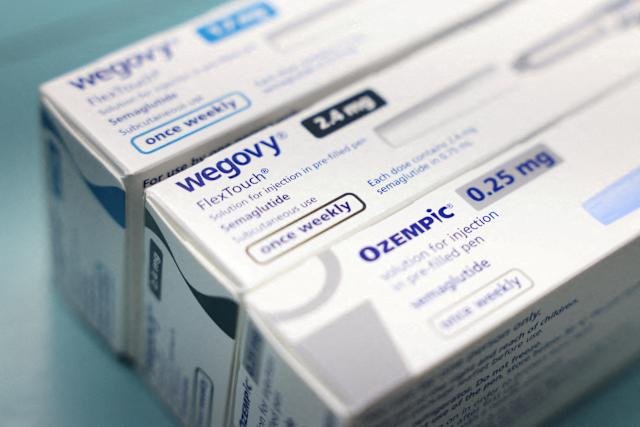
Alex: They get to leverage Novo's brand name. Imagine selling Ozempic officially instead of a knockoff version.
Maya: That's actually genius. Bad press, big profits.
🧠 Episode Quiz
Can you answer this?
Ozempic is one of the most talked-about drugs in the world right now. But it was not originally designed for weight loss. The FDA first approved it to treat which condition?
A — High blood pressure
B — Type 2 diabetes
C — High cholesterol
✅ Answer: B — Type 2 diabetes. Ozempic (semaglutide) was approved by the FDA in 2017 to help manage blood sugar in adults with type 2 diabetes. The weight-loss effect arrived later — and the business world has been leveraging it ever since.
📚 Bonus Vocabulary
Drop a lawsuit — to withdraw legal action voluntarily, before a verdict is reached. Not the same as losing. "Both sides agreed to drop the lawsuit after reaching a private settlement."
Step out of line — to break an agreed rule or cross a boundary that was made explicit. "The contract makes it clear: step out of line and the deal is off."
Knockoff — an unofficial copy of a product, usually cheaper and not licensed by the original maker. "The market was full of knockoff trainers that looked almost identical to the originals."
🎙 Want the full line-by-line breakdown? Luna and Mimyo walk through every expression in the episode.