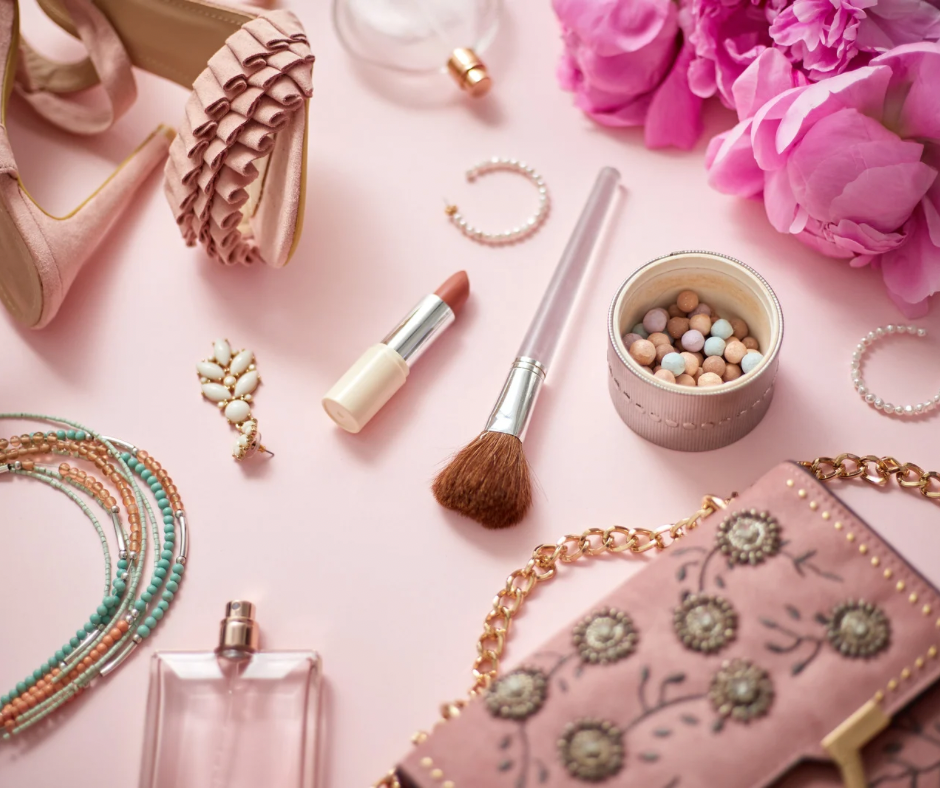
Close your eyes and picture someone buying makeup. If you're only picturing one type of person, you're already behind the times. The beauty industry has gotten a serious makeover — men are buying concealer, five-year-olds have skincare routines, celebrity brands are selling for a billion dollars, and AI deepfakes are stealing real influencers' identities. In this episode, we unpack the business behind the blush — and five expressions that will serve you well far beyond the beauty aisle.
⚡ 5 Key Expressions
Expression 01
Gotten a makeover
When something — a brand, a system, an industry, even a person's personality — has been significantly transformed or updated, we say it has "gotten a makeover." The literal meaning comes from the beauty world: a makeover is a complete transformation of someone's appearance. But figuratively, it signals a full, visible overhaul — not a minor tweak. Morning Brew's own opening line for this story was: "The beauty industry has gotten a makeover." It's vivid, punchy, and immediately signals dramatic change.
- "After the merger, the company's entire brand identity got a makeover."
- "I haven't seen him in two years — his whole personality got a makeover."
Expression 02
Untapped market
A group of potential customers that companies haven't yet reached or sold to. The image is a tap — a faucet — that has never been opened. The water (demand, money, opportunity) is already there; nobody has simply turned it on yet. It's a staple of business and strategy vocabulary, and it works just as well in casual conversation. The newsletter uses this concept throughout, describing how beauty brands rushed to reach men and young children — demographics that were previously ignored entirely.
- "The report identified rural consumers as a largely untapped market for digital banking services."
- "Honestly, mid-size cities are an untapped market for good ramen."
Expression 03
Go viral
To spread rapidly and organically online, usually because large numbers of people share something. The word "viral" borrows from biology — a virus spreads by replicating itself through a host network. Online content does the same thing through shares, reposts, and recommendations. One important nuance: "go viral" is specifically about online sharing. A rumor doesn't go viral — it spreads. A disease doesn't go viral — it breaks out. This distinction trips up many B2 learners who use the phrase too broadly.
- "The campaign went viral within 48 hours, reaching 12 million impressions without a single paid ad."
- "My cousin posted a video of our dog stealing food and it went viral — two million views now."
Expression 04
Tread on someone's turf
To move into someone else's territory — their area of expertise, authority, or ownership — in a way that feels aggressive or unfair. "Turf" is literally the grass on a sports field, and each team defends its side. Figuratively, your turf is the space that belongs to you: your market, your role, your creative domain. When a newcomer treads on it, there's friction. The phrase carries a territorial tension that makes it perfect for business disputes, professional overlap, and even friendly rivalry. It can be used seriously or playfully.
- "When the new VP started making hiring decisions without consulting department heads, she was clearly treading on their turf."
- "Hey, that's my joke — stop treading on my turf."
Expression 05
Draw backlash
To provoke a strong, widespread negative reaction from the public. "Backlash" is more than criticism — it implies collective momentum, a pushback from a significant group of people, often a reversal of goodwill. The verb "draw" works here the way it does in "draw a crowd" or "draw attention" — you cause it to gather toward you. The AI influencer trend drew backlash from human beauty creators who felt their livelihoods were being automated away. It's an essential phrase for discussing public reaction to business decisions, policies, and social trends.
- "The CEO's comments on remote work drew immediate backlash from employees across all divisions."
- "That tweet drew so much backlash she had to delete her whole account."
🎭 The Dialogue: Glow Up
Maya works in marketing and Alex is a business analyst. They're catching up over lunch at a café near their office — and the conversation takes a very beauty-industry turn. Listen for all five expressions.
📍 A café near their office, midday. Maya is scrolling on her laptop. Alex sits down with two coffees.
Maya: So how did the pitch go? You were presenting the men's skincare line, right?
Alex: Yeah. Honestly, the whole industry has gotten a makeover — ten years ago, this pitch wouldn't even exist.
Maya: True. I saw a report saying one in four Gen Z men now buys skincare regularly. That's a seriously untapped market.
Alex: Exactly. And the brands that move first are winning big. Rhode just sold for a billion dollars because every product they drop seems to go viral overnight.
Maya: I love Rhode, but some people say these celeb brands are treading on the turf of indie founders who built the space.
Alex: That's fair. The AI influencer thing has also drawn a lot of backlash — fake faces selling real products.
Maya: It's a mess. Though I have to admit, the snail mucin serum my sister bought actually works.
Alex: Don't tell me you're converting. I can't keep up with this industry.
🧠 Episode Quiz
Can you answer this?
Rihanna launched Fenty Beauty in 2017 and it became legendary for one specific reason. What was it?
- A — She was the first celebrity ever to launch a beauty brand.
- B — She released 40 shades of foundation, far more than the industry standard at the time.
- C — She partnered with a major K-beauty brand to create the line.
✅ Answer: B — Rihanna launched Fenty Beauty with 40 foundation shades, at a time when the industry standard was around 20, mostly catering to lighter skin tones. The move was widely seen as a genuine industry makeover. Fenty brought in $100 million in global revenue in just its first two months — and Rihanna's 50% stake is now worth around $700 million.
📚 Bonus Vocabulary
Drop (verb) — to release a new product suddenly, often with built-up hype. Originally from music ("an artist drops an album"), now used widely in fashion and beauty. "Every product they drop seems to go viral overnight."
Exploit — to make full use of something, often an opportunity or advantage. Can sound negative (taking unfair advantage) or neutral (smart utilization), depending on context. "Scammers are exploiting the cachet of real influencers."
Cachet — the prestige or status that something carries, making it desirable or trustworthy. A French loanword now fully at home in English. "AI deepfakes exploit the cachet of influencers with large followings."