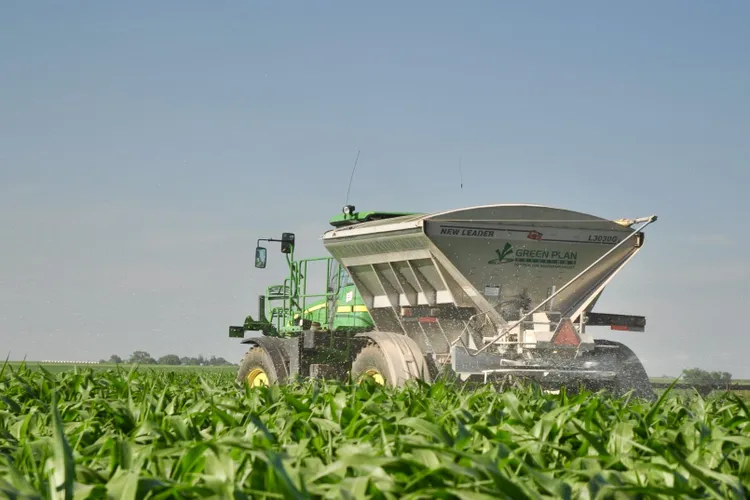
Everyone is watching oil prices spike. Brent crude crossed $100 a barrel, the Strait of Hormuz is closed, and markets are tumbling. But hiding behind those headlines is a quieter, more dangerous story: fertilizer. No strategic reserve. Plants already running near capacity. Prices up 30% in a single week — right before spring planting season. In this episode, Luna and Mimyo unpack the crisis through a real conversation between Maya and Alex, and teach you five expressions that belong in every upper-intermediate learner's toolkit.
⚡ 5 Key Expressions
Expression 01
Under the radar
To go unnoticed or avoid attention. The phrase comes from military technology — radar systems detect aircraft, so flying under the radar means evading detection entirely. In everyday English, it means something or someone has been present but overlooked. It's not secretive or sneaky; it's simply quiet. The fertilizer crisis is a perfect example: the story was real, the risk was real, but nobody was talking about it. That gap between reality and attention is exactly what this expression captures.
- "The startup operated under the radar for two years before its public launch."
- "I've been trying to stay under the radar since I missed the deadline."
Expression 02
Running near capacity
Operating at almost maximum output, with very little room left to increase. Capacity is the absolute maximum a system can handle — a stadium, a factory, a server, even a person. Running near capacity means you're already at ninety or ninety-five percent. The danger isn't just the high number; it's the absence of a buffer. When a crisis hits, there's nowhere to go. That's exactly why the fertilizer shortage is so alarming — the plants that could have ramped up production simply had no headroom to do so.
- "Our logistics network is running near capacity — any added demand will require new infrastructure."
- "Sorry, I can't take on a new project right now. I'm running near capacity."
Expression 03
Reignite
To start something burning again — something that was intense before, cooled down, and is now heating up a second time. The prefix re- means again, and ignite means to set something on fire. What makes this word so vivid is the implied history: there was a first fire, a period of calm, and now the heat is returning. In 2022, food inflation burned through household budgets worldwide. It eased. Now, with fertilizer prices surging into planting season, the fear is that the same fire is about to catch again.
- "The merger announcement reignited investor interest across the whole sector."
- "Running into an old friend reignited my passion for photography."
Expression 04
Locked out of the market
Unable to participate in or access a market you would normally have entry to. Think of the market as a building — one you usually walk straight into. Being locked out means the door has been shut on you, and you can't get back in. For Middle Eastern fertilizer producers, the closure of the Strait of Hormuz is that door. They have the product. There are buyers. But the route is blocked, and they are standing outside. The key detail is that this is external — it's not that they chose to leave. The lock is on someone else's door.
- "Smaller suppliers found themselves locked out of government contracts after the new regulations."
- "I missed the early bird window — now I'm locked out of the good seats."
Expression 05
One-two punch
Two bad things hitting in close succession, each one making the damage from the other worse. The image is from boxing: a one-two is a combination — a quick jab to the head, immediately followed by a harder cross. Neither hit alone would knock you down. Together, they do. In economics or news analysis, a one-two punch signals compounding problems: the first blow weakens you, and the second arrives before you've recovered. Rising fertilizer costs hurt farmers. A bad harvest season follows. That's not two separate problems — it's one sequence designed to knock the economy flat.
- "Rising interest rates and slowing growth delivered a one-two punch to the housing market."
- "Getting dumped and losing my job in the same week — that was a real one-two punch."
🎭 The Dialogue: Monday Morning
Maya and Alex are colleagues at a commodity trading firm. It's Monday morning, Maya has just read the weekend news, and she's not happy about what she found. Listen for all five expressions — they come up naturally, the way real speakers use them.
📍 The office kitchen. Maya is making coffee. Alex walks in.
Maya: Alex, did you read about the fertilizer situation over the weekend? This one has been completely under the radar.
Alex: I saw a headline. But I didn't think it was that serious. Oil is the big story, right?
Maya: That's what everyone thinks. But most fertilizer plants were already running near capacity before all this started. There's no buffer.
Alex: So the Hormuz closure makes it worse because the supply was already tight?
Maya: Exactly. And if prices keep climbing, it could reignite the food inflation we saw back in 2022. Farmers are heading into spring planting right now.
Alex: And Middle Eastern producers — they're just locked out of the market completely?
Maya: For now, yes. Which is good news for US fertilizer companies, but terrible news for global food prices.
Alex: So rising fertilizer costs plus a bad harvest season — that's a one-two punch the economy really can't afford right now.
🧠 Episode Quiz
Can you answer this?
Urea is one of the most important nitrogen fertilizers in the world — but it's also used in something you might find in your bathroom cabinet. What is it?
- A — Car engines
- B — Skincare products
- C — Fire extinguishers
✅ Answer: B — Skincare products. Urea is a common ingredient in moisturizers and creams, where it acts as a humectant — it draws moisture into the skin and keeps it there. It sounds alarming, but it's completely safe and used in dermatology worldwide. The same compound feeding your crops is hydrating your hands.
📚 Bonus Vocabulary
Buffer — a safety zone or cushion that absorbs pressure before it becomes a crisis. "There's no buffer" means there is no margin for error. Common in manufacturing, finance, and everyday speech.
Commodity — a raw material or agricultural product that can be bought and sold on global markets. Oil, wheat, natural gas, and fertilizer are all commodities. Knowing this word unlocks a lot of financial news.
Stagflation — a painful economic combination of stagnant growth and high inflation happening at the same time. Normally, inflation and slow growth don't arrive together — stagflation is the worst of both worlds.
Strategic reserve — a government stockpile held for emergencies. The US maintains a Strategic Petroleum Reserve for oil crises. There is no equivalent for fertilizer — which is exactly why this story matters.