A ceasefire doesn't fix everything. The guns may have gone quiet in the Middle East, but the economic damage from the Iran war is already being called irreversible by the IMF. Oil prices are up. Shipping routes are barely open. Food supply chains are disrupted. And global growth forecasts are being cut — even if peace endures. In this episode, we unpack the real-world fallout through five B2 expressions that go far beyond geopolitics and into everyday business and life.
⚡ 5 Key Expressions
Expression 01
Up in the air
Uncertain, unresolved, or not yet decided. The image is of something floating — it hasn't landed anywhere, and nobody knows where it will come down. This idiom scales perfectly from small everyday situations to major geopolitical ones. You can use it whenever a decision, plan, or outcome is still genuinely unclear. Crucially, "up in the air" doesn't imply things are going badly — just that nothing is settled yet. The Iran ceasefire may be holding, but the economic consequences remain very much up in the air.
- "The merger is still up in the air — both boards need to vote before anything is confirmed."
- "I don't know if I'm going to the party yet — my plans are kind of up in the air."
Expression 02
Hinge on
To depend entirely on one critical factor. A hinge is the small metal piece that connects a door to a wall — if the hinge breaks, the whole door falls. The phrase uses that image deliberately: when something "hinges on" another thing, it means the entire outcome rests on that single point. It creates a sense of concentrated pressure and dependency. Whether the Iran ceasefire becomes a lasting peace hinges on diplomatic talks — everything else follows from that one variable.
- "The success of this product launch hinges on the marketing budget getting approved in time."
- "Whether we go camping this weekend hinges entirely on the weather forecast."
Expression 03
Strapped
Short on cash or essential resources — financially constrained to the point where you can barely move. The image is of being tied up so tightly you have no room to maneuver. "Strapped for cash" is the most common form, but you can also be strapped for time, strapped for resources, or simply strapped. It works in both formal and very casual contexts. Companies that relied on Middle Eastern supply chains are finding themselves strapped as costs spike and alternatives are hard to find fast.
- "The startup was strapped for capital after the funding round fell through."
- "Can we split the bill? I'm a little strapped this week."
Expression 04
On a hunch
Acting based on instinct or gut feeling rather than hard evidence or careful analysis. A hunch is an intuitive sense that something is true or will happen — you can't fully explain it with data, but you feel it. "On a hunch" always implies a degree of risk: you're betting on instinct, not logic. Sometimes that pays off brilliantly. Sometimes it doesn't. Analysts who made long-term forecasts before the conflict escalated — and got it wrong — were essentially operating on a hunch about how stable the region would remain.
- "She invested in the company early, on a hunch that remote work would become a permanent shift."
- "I called him on a hunch — and it turned out he was literally thinking about me at that exact moment."
Expression 05
Endure
To last through hardship — to keep going despite difficulty, pain, or adverse conditions. Endure implies more than just surviving: it suggests strength, persistence, and continuation under pressure. You don't just get through something when you endure it; you keep functioning through it. The IMF's warning frames it starkly — some economic damage will be permanent even if peace endures. The word choice is pointed: peace itself is not guaranteed to last, and even if it does, the damage may outlive it.
- "Brands that endure economic downturns are usually the ones that invested deeply in customer loyalty."
- "I don't know how she endures those five-hour flights in economy. I genuinely could never."
🎭 The Dialogue: Still Settling
Maya and Alex are colleagues catching up at a café on a Friday afternoon. The ceasefire news is everywhere, but the economic picture isn't getting any clearer — and they both know it.
📍 A café near the office, Friday afternoon. Maya is scrolling through her phone. Alex drops into the chair across from her.
Maya: I keep reading about this ceasefire, but honestly? The economic situation still feels completely up in the air.
Alex: It really is. Everything hinges on whether the peace deal actually holds this weekend.
Maya: And even if it does — shipping costs, oil prices, fertilizer. The damage is already done.
Alex: Exactly. You can't just flip a switch. A lot of companies are going to be strapped for months because of this.
Maya: What gets me is that some analysts didn't see it coming. They were making long-term plans almost on a hunch.
Alex: Well, the ones who built in flexibility are going to endure. The rest are going to have a very rough year.
Maya: I just hope the ceasefire is more than a pause. Because right now, nobody really knows what comes next.
Alex: Nobody does. That's kind of the whole problem.
🧠 Episode Quiz
Can you answer this?
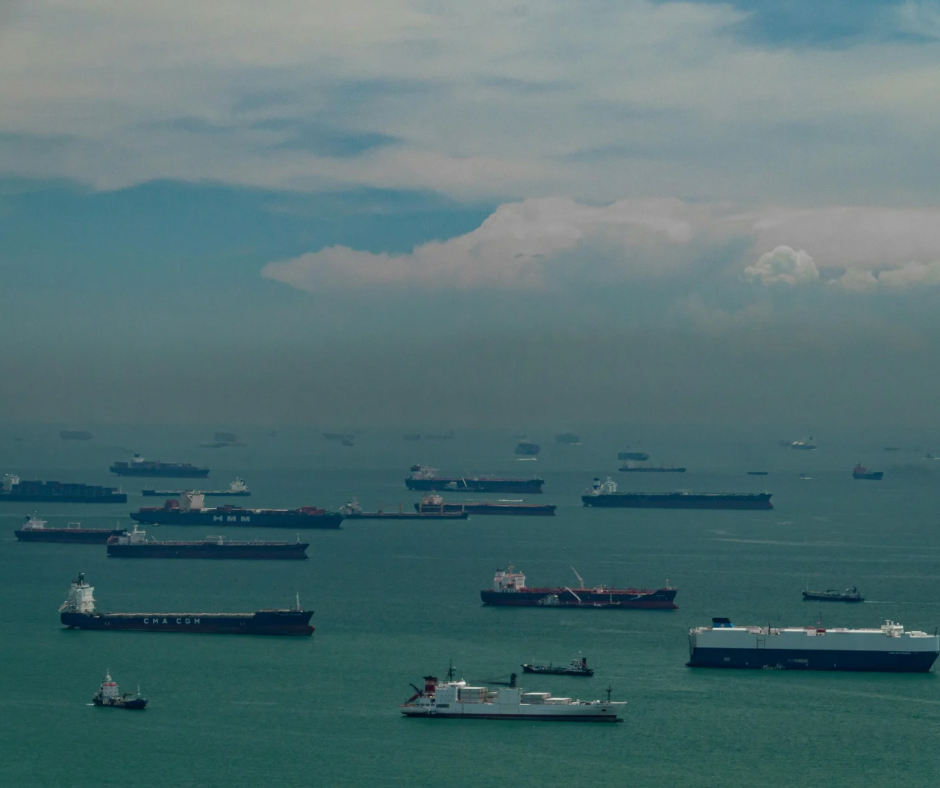
The Strait of Hormuz — at the center of today's story — is one of the most critical waterways in the world. Approximately what percentage of the world's seaborne oil trade passes through it?
- A — About 10%
- B — About 20%
- C — About 30%
✅ Answer: C — About 30%. Some estimates cite closer to 20% of all traded crude oil, but when liquefied natural gas and petroleum products are included, the figure climbs to roughly 30% of the world's seaborne oil trade. At its narrowest point, the strait is only about 33 kilometers wide — making it one of the most consequential chokepoints on the planet.
📚 Bonus Vocabulary
Ceasefire (noun) — a formal agreement to stop fighting, usually temporary. A ceasefire is not a peace treaty — it halts hostilities but does not resolve the underlying conflict. "The ceasefire held for two weeks, but negotiations over a longer-term accord were still ongoing."
Chokepoint (noun) — a narrow strategic passage that controls the flow of traffic, goods, or military assets. Used in geography, logistics, and military strategy. "The canal has become a critical chokepoint for global shipping — any disruption there ripples across supply chains worldwide."
Irreversible (adjective) — impossible to undo or return from. When economists use this word, it carries weight: some losses don't recover even when conditions improve. "The damage to the coral reef was irreversible — even decades of conservation couldn't bring it back to what it was."