Helium isn't just for birthday balloons. It's a critical ingredient in the AI chip supply chain — and right now, a war in the Middle East has shut down a key chokepoint in the Persian Gulf, sending prices through the roof. In this episode, we follow Maya and Alex as a manageable problem balloons into a full crisis, and pick up five B2 expressions that belong in every serious English learner's toolkit.
⚡ 5 Key Expressions
Expression 01
Spike
To increase suddenly and sharply — or the noun form of that sudden rise. A gradual increase is a rise or a climb. A spike is faster, steeper, and more alarming. You'll hear it constantly in financial and news English: prices spike, demand spikes, crime spikes. It can also be a noun — "there was a spike in demand." The key detail: spike almost always implies upward movement. When things fall sharply, English uses different words — crashed, plummeted, tumbled. Spike belongs to the upside.
- "A sudden spike in energy costs forced the factory to cut production by thirty percent."
- "My screen time spiked during exam week. I was stress-scrolling every night."
Expression 02
Chokepoint
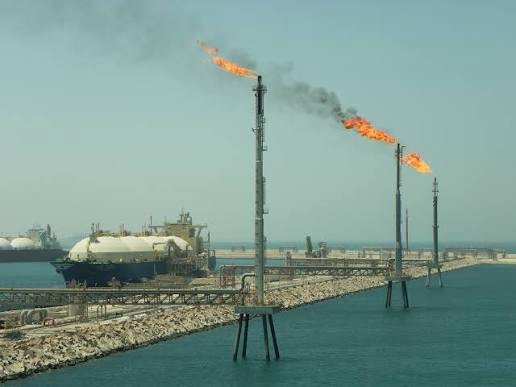
A narrow passage or single process where a blockage stops everything that depends on it — upstream and downstream alike. The word is vivid because it captures both geography and consequence: choke the point, and the whole system suffocates. In today's story, the Strait of Hormuz is the chokepoint — a waterway roughly 33 kilometers wide at its narrowest, through which about a fifth of the world's oil flows. But the word travels far beyond maps. In business, a chokepoint is any bottleneck that has outsized power to halt a whole operation.
- "The customs clearance process has become the chokepoint for our entire import operation."
- "My morning coffee is honestly the chokepoint of my entire day."
Expression 03
Ballooning
Growing rapidly, out of control, and with a sense of alarm — like a balloon being inflated past the point of comfort. The word is almost always used when the growth is unwelcome: ballooning costs, a ballooning deficit, ballooning responsibilities. It implies that things are expanding faster than anyone planned and may be heading toward a breaking point. Notice the structure "ballooning into" — it tells you the direction of expansion. A small issue can balloon into a full crisis. A simple task can balloon into a months-long project.
- "The renovation budget started at fifty thousand dollars and ballooned into nearly double that within six months."
- "What started as a quick chat ballooned into a three-hour argument."
Expression 04
Silver lining
The small positive hidden inside a larger problem or difficult situation. The phrase comes from the proverb "every cloud has a silver lining" — a reference to how sunlight behind a dark cloud makes its edges glow silver. In conversation, you rarely need the full proverb. You can simply ask "is there a silver lining?" or say "the silver lining is..." It works in genuine optimism and in gentle sarcasm — "well, what's the silver lining this time?" The tone depends entirely on delivery, which makes it a versatile and natural phrase.
- "The product launch failed, but the silver lining is that we learned exactly what our customers don't want."
- "I missed my flight, but the silver lining was an extra afternoon to explore the city."
Expression 05
Down to the wire
When a situation reaches its deadline or final moment with the outcome still uncertain and almost no time remaining. The origin is horse racing: in the nineteenth century, a wire was stretched across the finish line. A race that was too close to call until the horses crossed the wire was said to go "down to the wire." Today the expression covers any high-stakes situation where time is nearly gone and anything could still happen — a contract negotiation, a project deadline, an election, an exam. It can describe an ongoing situation ("we're down to the wire") or a completed one ("it went all the way down to the wire, but we made it").
- "The two teams negotiated down to the wire, finally signing the deal at midnight on the last day."
- "I finished my assignment, but it went down to the wire — I submitted it with two minutes to spare."
🎭 The Dialogue: Running on Empty
Maya works in supply chain logistics and Alex is her colleague in finance. It's early morning and the latest commodity data has just come in. Neither of them likes what they're seeing.
📍 Office, early morning. Maya is staring at her screen. Alex walks over with two coffees and no good news.
Maya: Did you see the helium numbers this morning? The cost has nearly doubled in a month. This is getting serious.
Alex: It's not just helium. The whole situation is spiking across the board — oil, plastic, shipping. Everything.
Maya: The real problem is the Strait of Hormuz. It's a total chokepoint. Close it, and a third of the world's helium just stops moving.
Alex: And without helium, our chip suppliers in Korea are going to run out of cooling capacity by June. The timeline is ballooning into a full crisis.
Maya: Is there any silver lining here? Any supplier outside the region we can pivot to?
Alex: There are a few in the US, but their capacity is limited. We're already down to the wire on contracts for Q2.
Maya: So what do we do if Korea runs dry before we secure alternative supply?
Alex: Honestly? We start rationing. And we pray for a ceasefire.
🧠 Episode Quiz
Can you answer this?
Helium is the second most abundant element in the entire universe — but on Earth it is surprisingly rare and cannot be easily replaced once it escapes into the atmosphere. Where does most of the world's commercial helium supply actually come from?
- A — The United States and Qatar
- B — Russia and Canada
- C — Australia and Norway
✅ Answer: A — The United States (primarily Texas and Kansas) and Qatar together account for the majority of global commercial helium production. The US government spent decades stockpiling helium in a giant underground reserve in Texas called the National Helium Reserve — originally built for military airships, not party balloons. Qatar's large natural gas fields make it a major co-producer, which is exactly why the Strait of Hormuz closure is hitting the helium market so hard.
📚 Bonus Vocabulary
Across the board (phrase) — affecting everything or everyone, without exception. Alex uses it when he says the situation is "spiking across the board." The image comes from a board displaying all items, prices, or options — if something changes across the board, nothing is spared. "The company announced salary increases across the board — every department, every level."
Pivot (verb) — to change direction or strategy, often quickly and in response to new circumstances. Maya asks whether they can pivot to a supplier outside the region. The word comes from basketball, where a player pivots on one foot to shift direction without moving. In business, it signals a deliberate, strategic turn. "When the original funding fell through, the team pivoted to a subscription model and it saved the company."
Rationing (noun/verb) — deliberately limiting how much of a scarce resource each person or group can use, in order to make it last. Alex uses it as a last resort: if supply runs out before alternatives are secured, rationing begins. The word carries a wartime feeling — and in today's story, that context is entirely literal. "During the shortage, the government began rationing fuel to essential services first."